
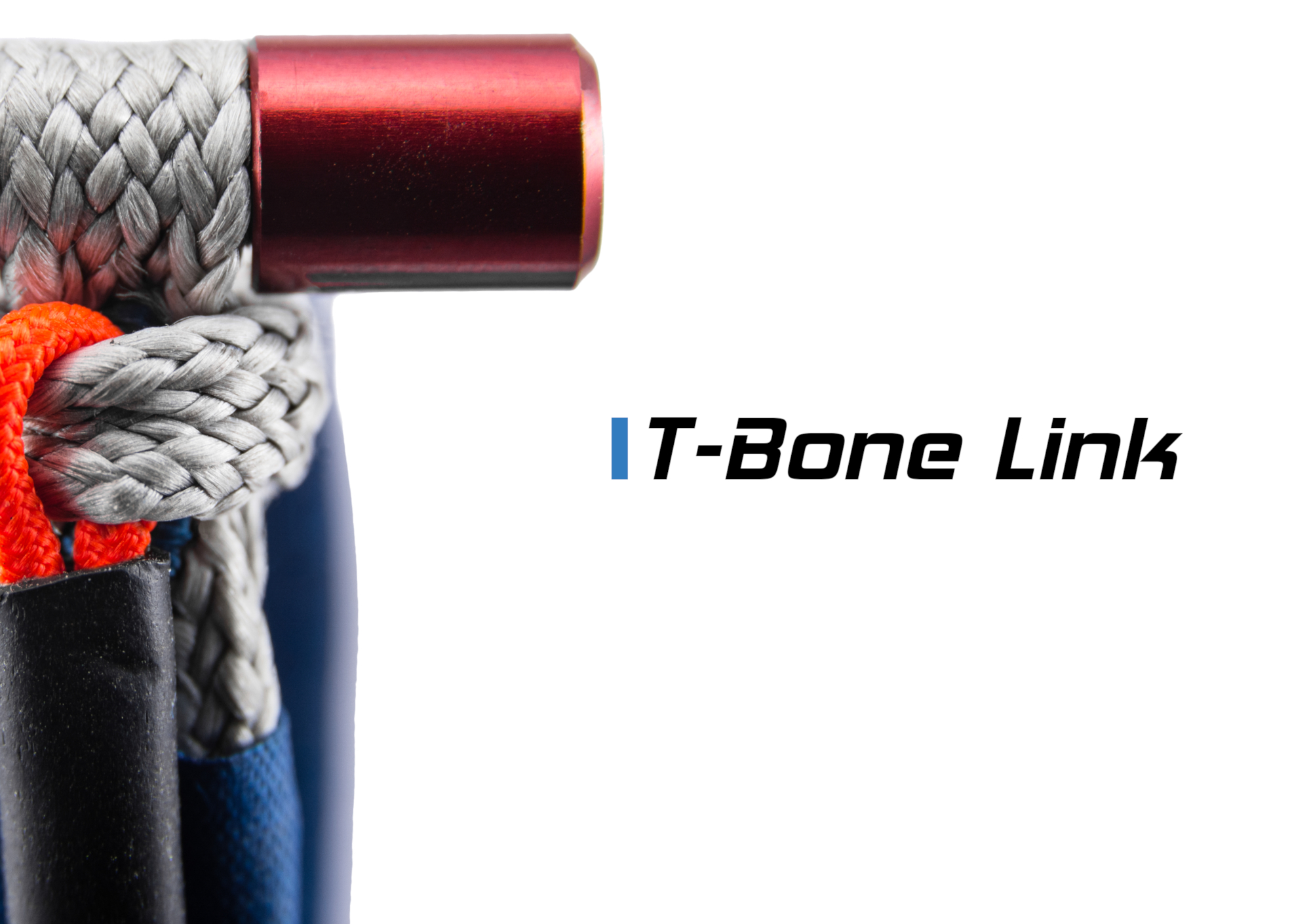
T-Bone Link: Why and For Whom?
T-Bone links are part of the soft-link family, just like traditional softlinks.
Widely adopted in skydiving for many years, this type of connection is now establishing itself in paragliding, although it still raises questions and hesitations among pilots.
Here we clarify the essential characteristics of soft connectors to give you complete confidence in their use.
Let's explore every facet of these innovative connectors…
STRENGTH?
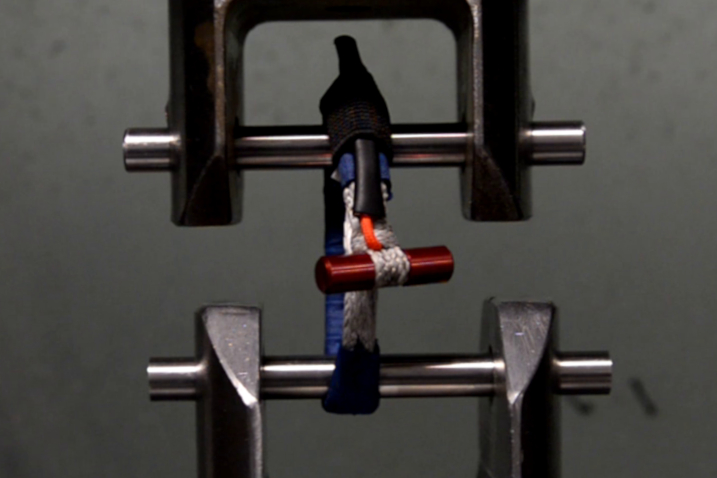
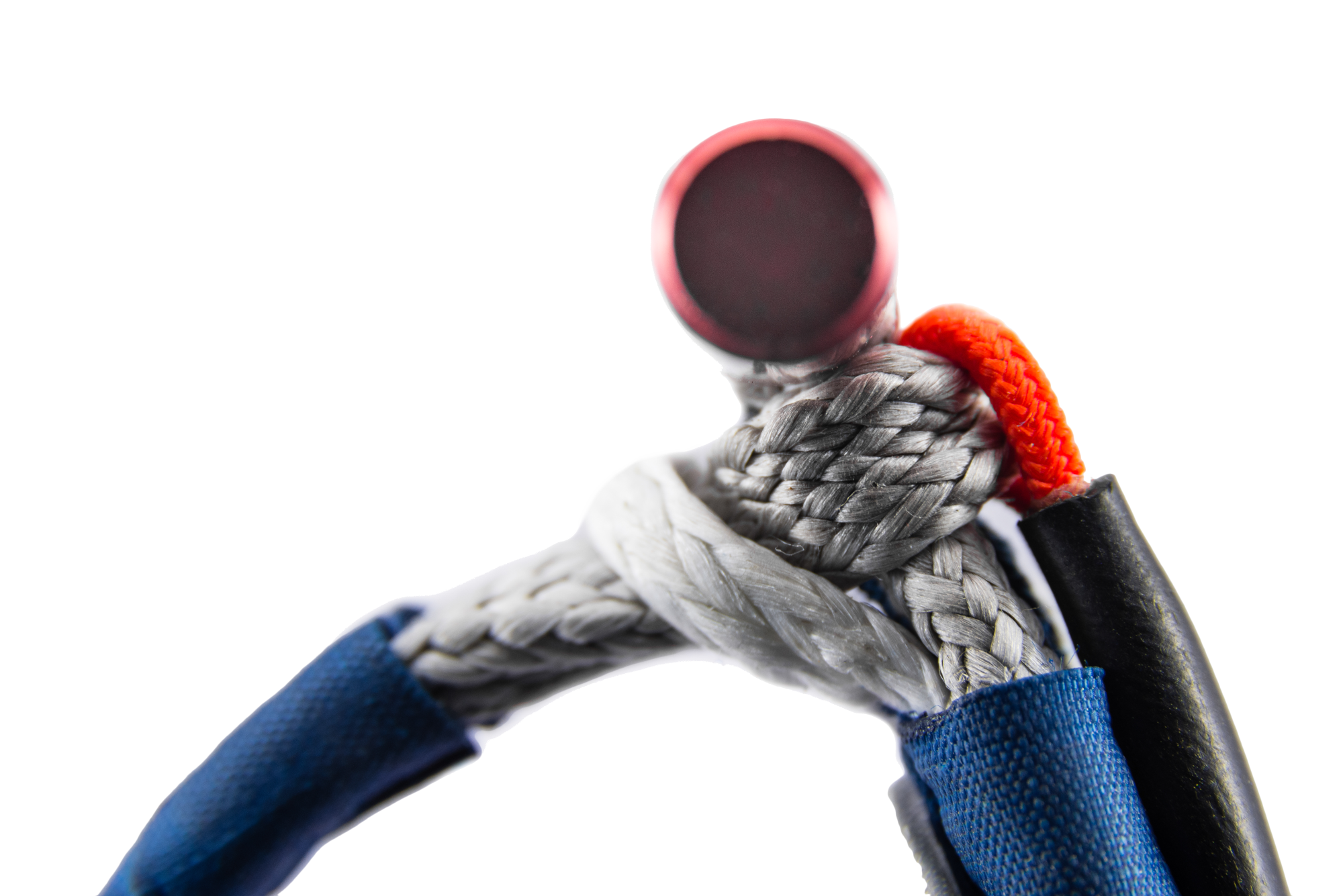
Despite an apparent delicacy due to their ultralight weight, these connectors are crafted from ultra-high-strength Dyneema (or high-modulus derivatives). Breaking strength tests match or exceed those of classic hardware like automatic carabiners or steel quick links (maillons rapides). Depending on design, this strength is achieved either through multiple wraps or a single engineered loop, as on the T-Bone link.
Specifically, Kortel T-Bone links boast a breaking strength exceeding 2,400 daN (equivalent to 2,400 kg!). In comparison, paragliding harness certification standards (EN 1651) require a minimum resistance of 1,500 daN across load axes (100 kg under 15G acceleration), which translates to 750 daN per main hang point. T-Bone links therefore provide more than triple the certified strength required at the harness attachment points…
LOCKING?
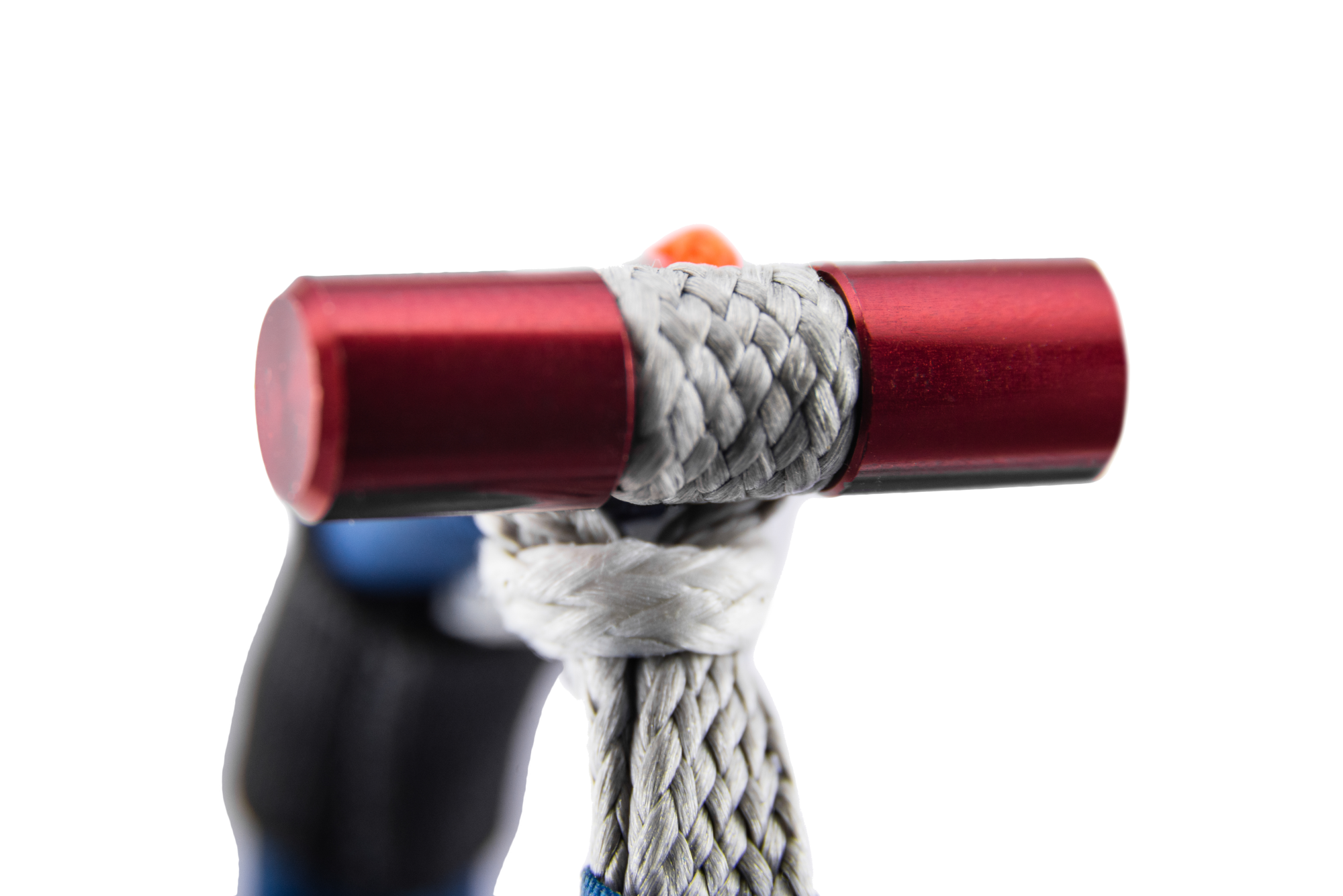
Fastening a soft connector requires a simple learning curve compared to an auto-locking carabiner that clicks shut automatically. However, the technique is straightforward. On T-Bone links, we developed the “Konnect” toggle system, which closes and locks in a single intuitive gesture. The loop tolerance is precision-tailored to eliminate any possibility of unintentional release.
Once locked, there is zero risk of accidental opening caused by impacts, vibrations, or temporary slack in the system.
This reliability makes them exceptionally advantageous for hidden connections, particularly rescue parachute bridles (at the shoulders or inside the reserve container). No more worrying about threaded barrels unscrewing, cross-loading, or corroding over time…
WEAR AND TEAR?
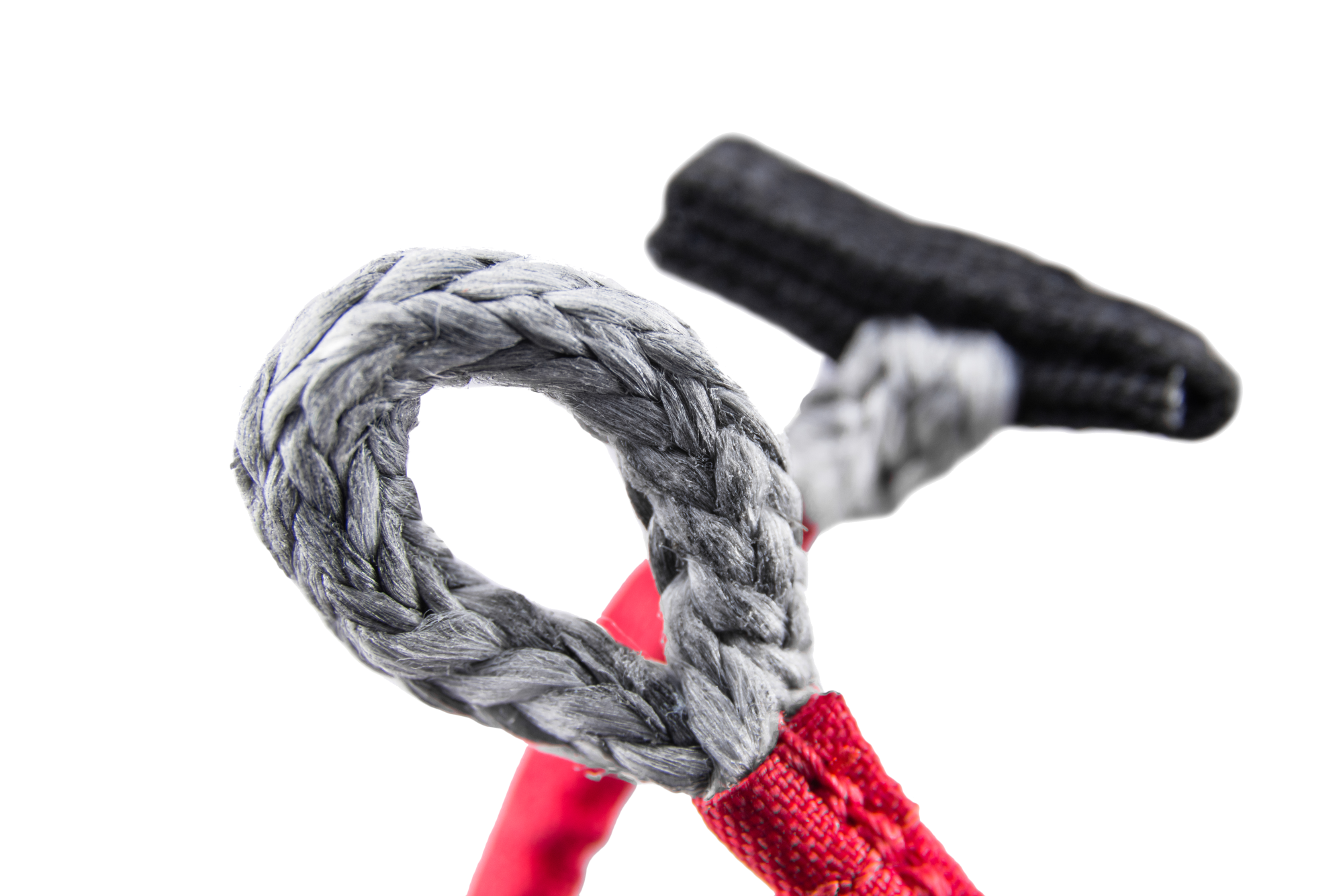
Their textile appearance might lead pilots to assume short lifespans, yet Dyneema is remarkably durable. Its only notable vulnerability is excessive friction-induced heat.
The T-Bone link features a protective sleeve (blue fabric) that shields the core from external abrasions. As long as this outer sleeve remains intact, the Dyneema core is completely safeguarded. For exposed loop sections near the toggle, inspect regularly for severed fibers. Slight surface fuzzing (pilling) is normal and does not compromise structural integrity.
If you detect signs of friction burning (darkened glaze, melted fibers) or cut strands, retire the link immediately.
WHERE CAN THEY BE USED?
In general, soft connectors can be employed across virtually any connection in paragliding, provided sensible guidelines are respected:
Breaking strength requirements?
Always verify that breaking strength aligns with certified standards for the specific location. The diagrams below illustrate standard certification requirements based on a 100 kg pilot at 15G.
NOTE: If your harness is certified to 130 kg, apply the proportional multiplier: 130/100 = 1.3.
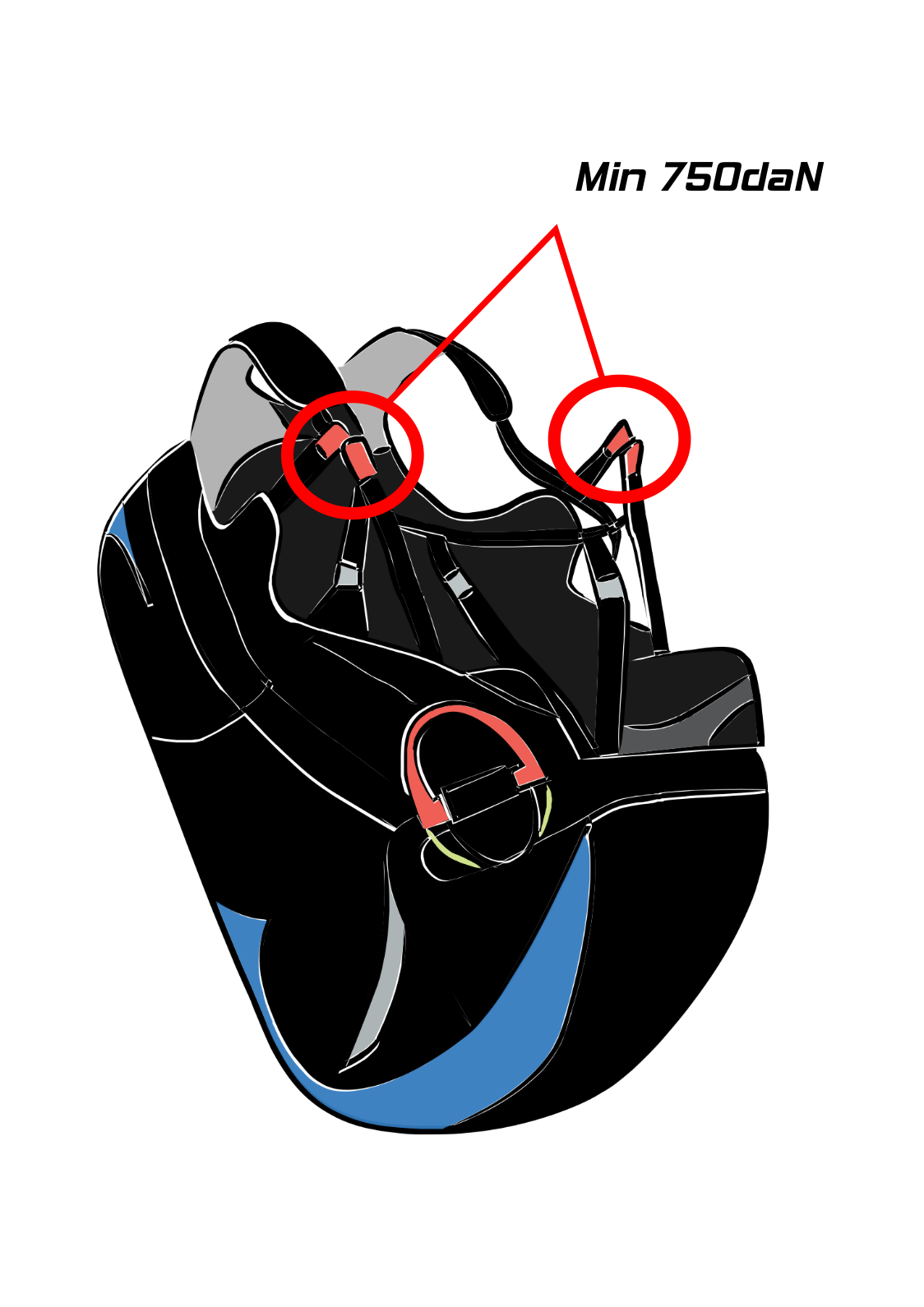
Solo Harness / Wing Connection
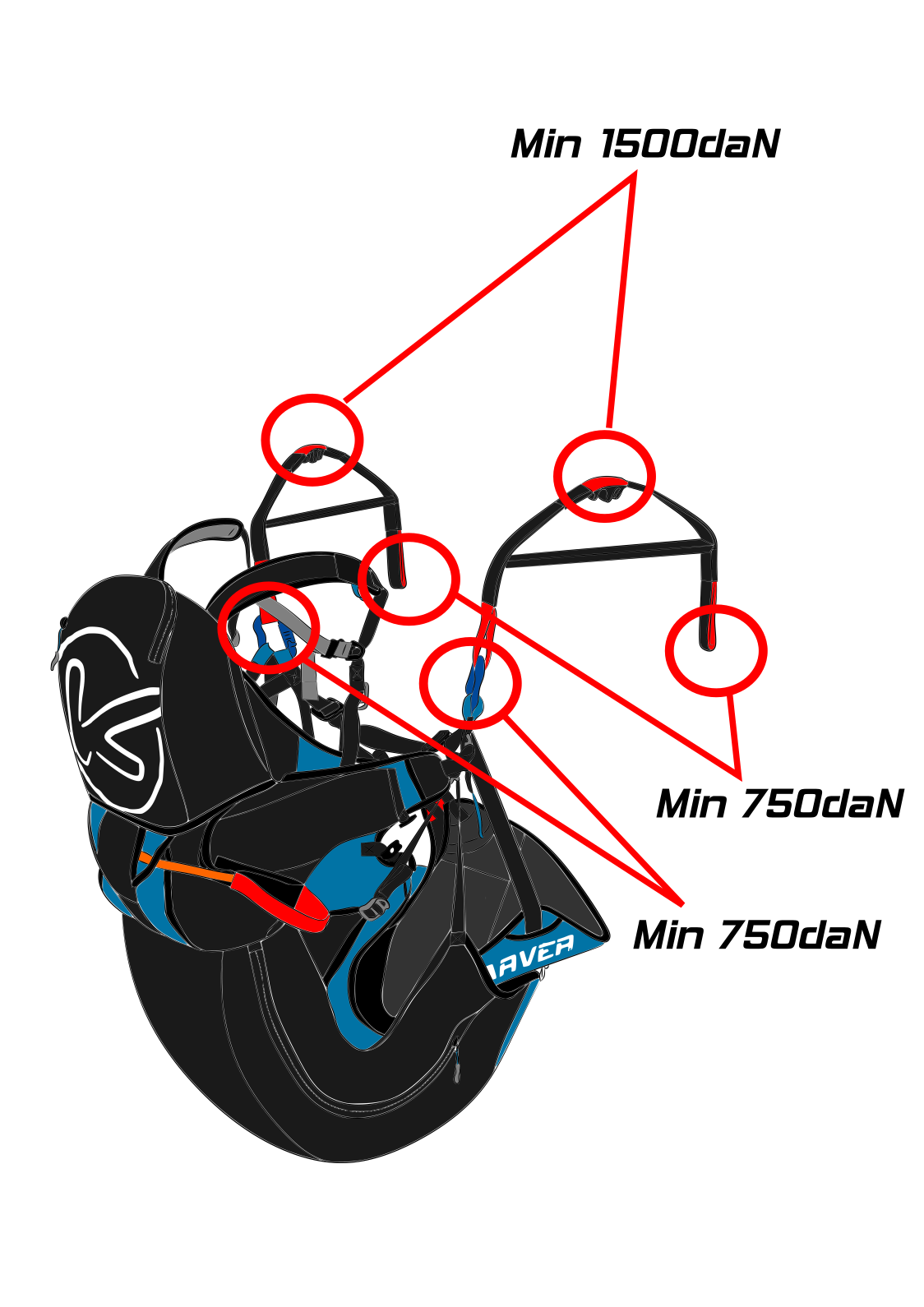
Tandem Harness / Wing Connection
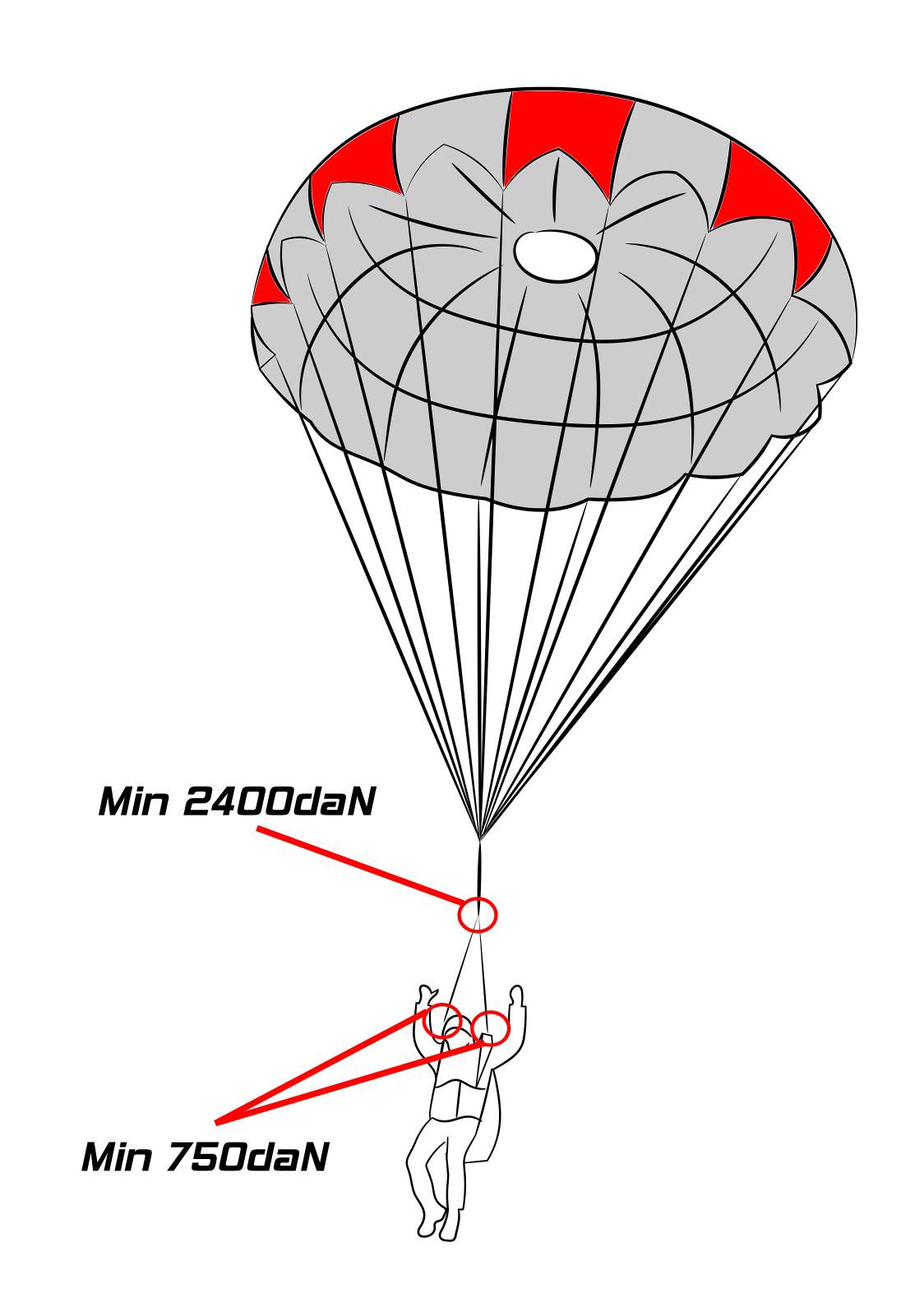
Solo Harness / Reserve Connection
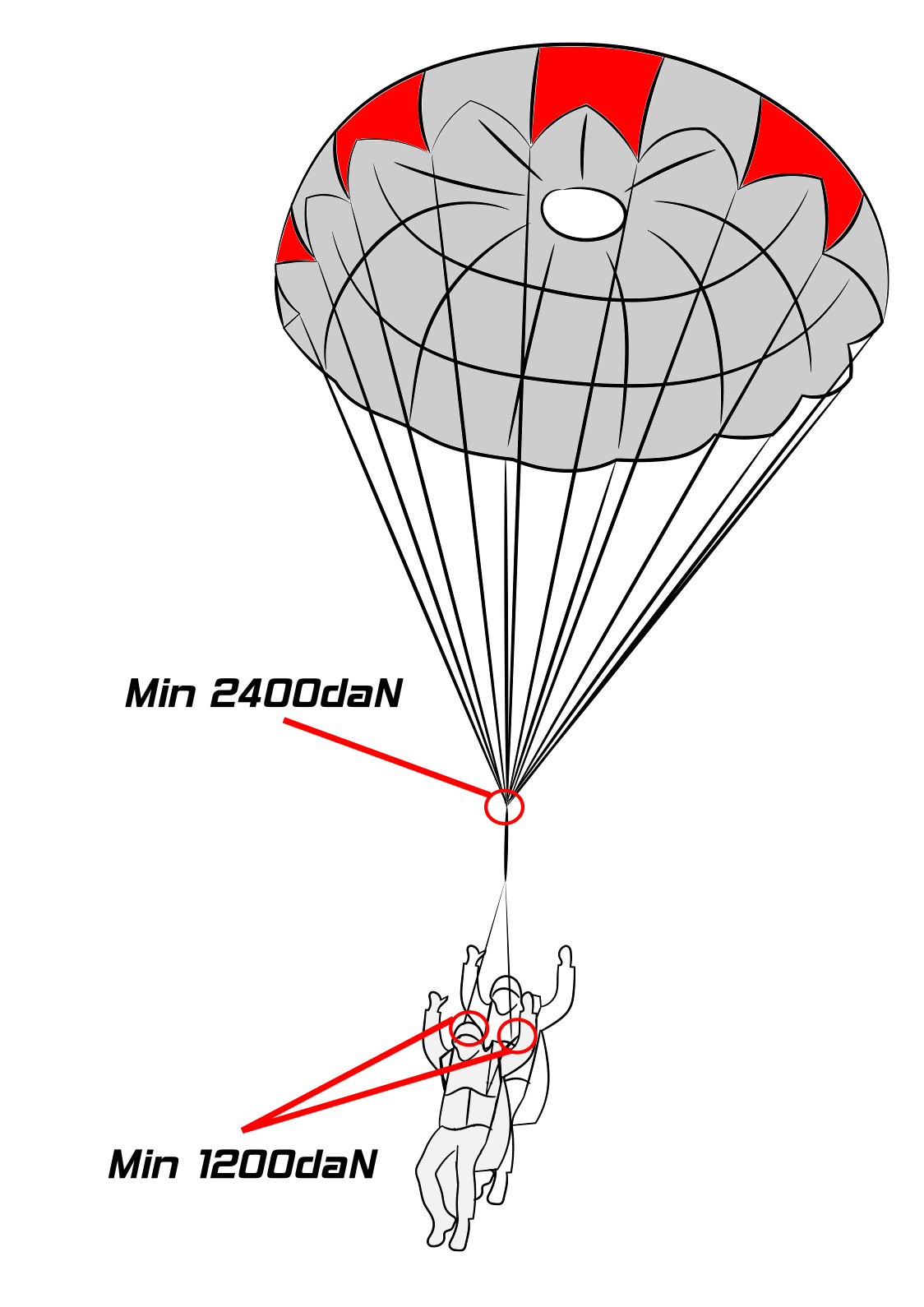
Tandem Spreader / Reserve Connection
You may observe some regulatory discrepancies across different connection points…
Reserve bridles require significantly higher breaking strength than harnesses because standards assume bridles may serve interchangeably for solo or tandem use.
The values shown here reflect certified minimums, accounting for the weakest link in the chain.
Webbing width and compatibility?
As detailed in our article on “Thoughts on Connectors”, metallic carabiners must match webbing widths to prevent dangerous cross-loading.
The same principle applies to soft links: installed under tension on excessively wide webbing, a soft link bunches and pinches the webbing, potentially compromising load distribution.
We recommend using soft connectors like T-Bone links on webbing widths under 25 mm to prevent bunching, or on slender Dyneema loops like those on the Kruyer II and Kruyer III.
This guidance applies across all paragliding links: harness hang points, riser loops, rescue bridles, and reserve lines.
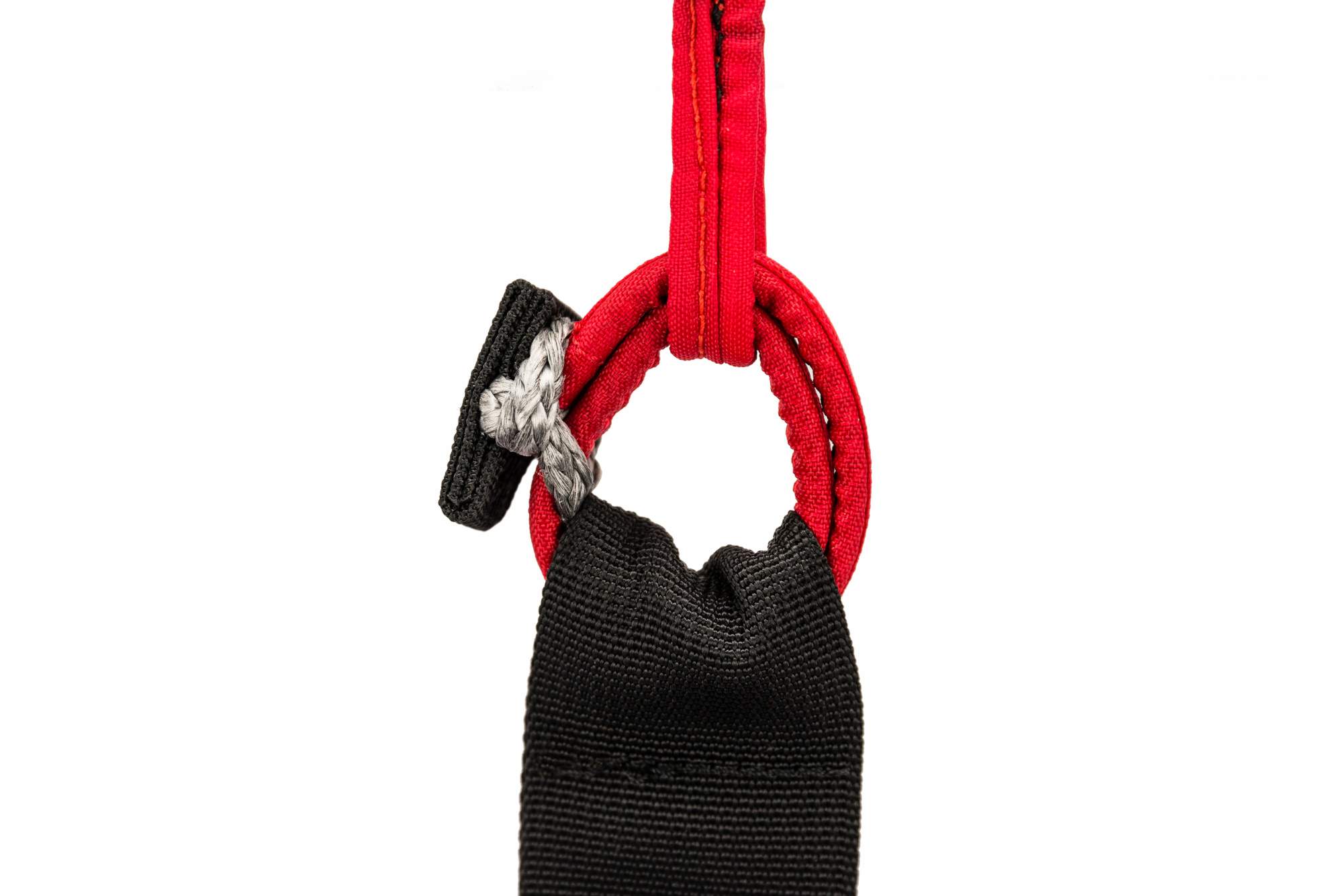
Example of a Soft-link installed on 40mm black webbing
We recommend using soft connectors like T-Bone links on webbing narrower than 25 mm to avoid edge compression, or on slender Dyneema loops such as those on the Kruyer II and Kruyer III.
This holds true across all connection points: harness, risers, reserve bridles, and the rescue parachute itself.
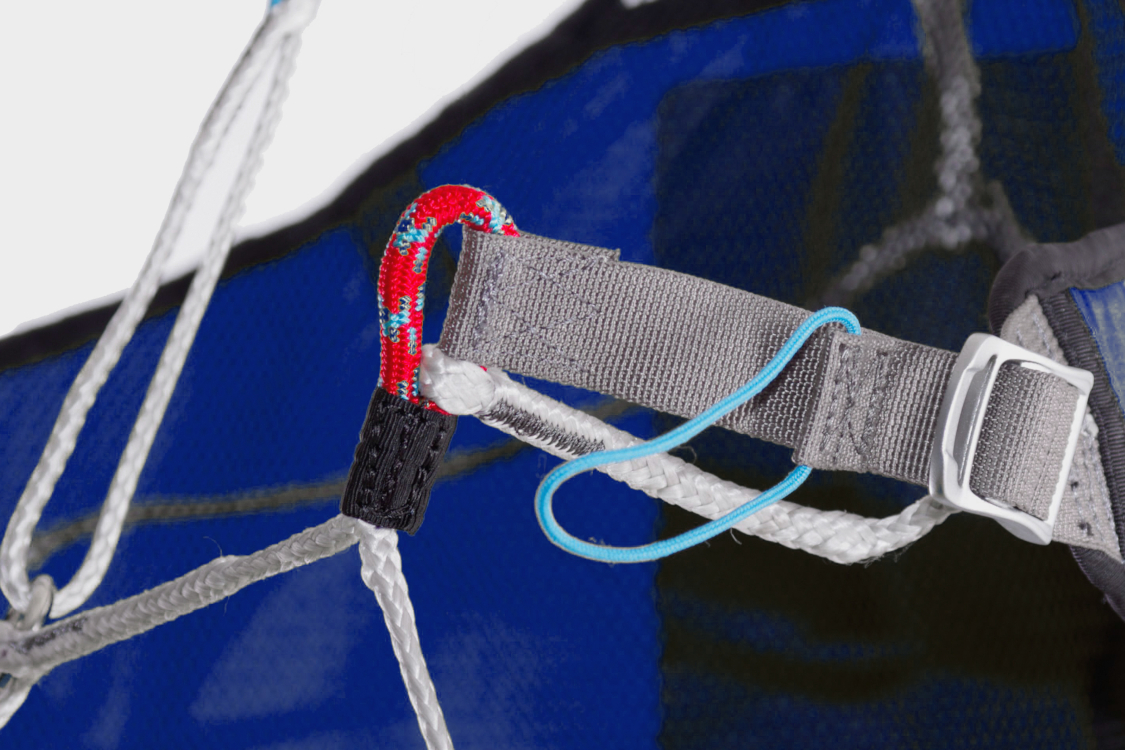
Kruyer II attachment point
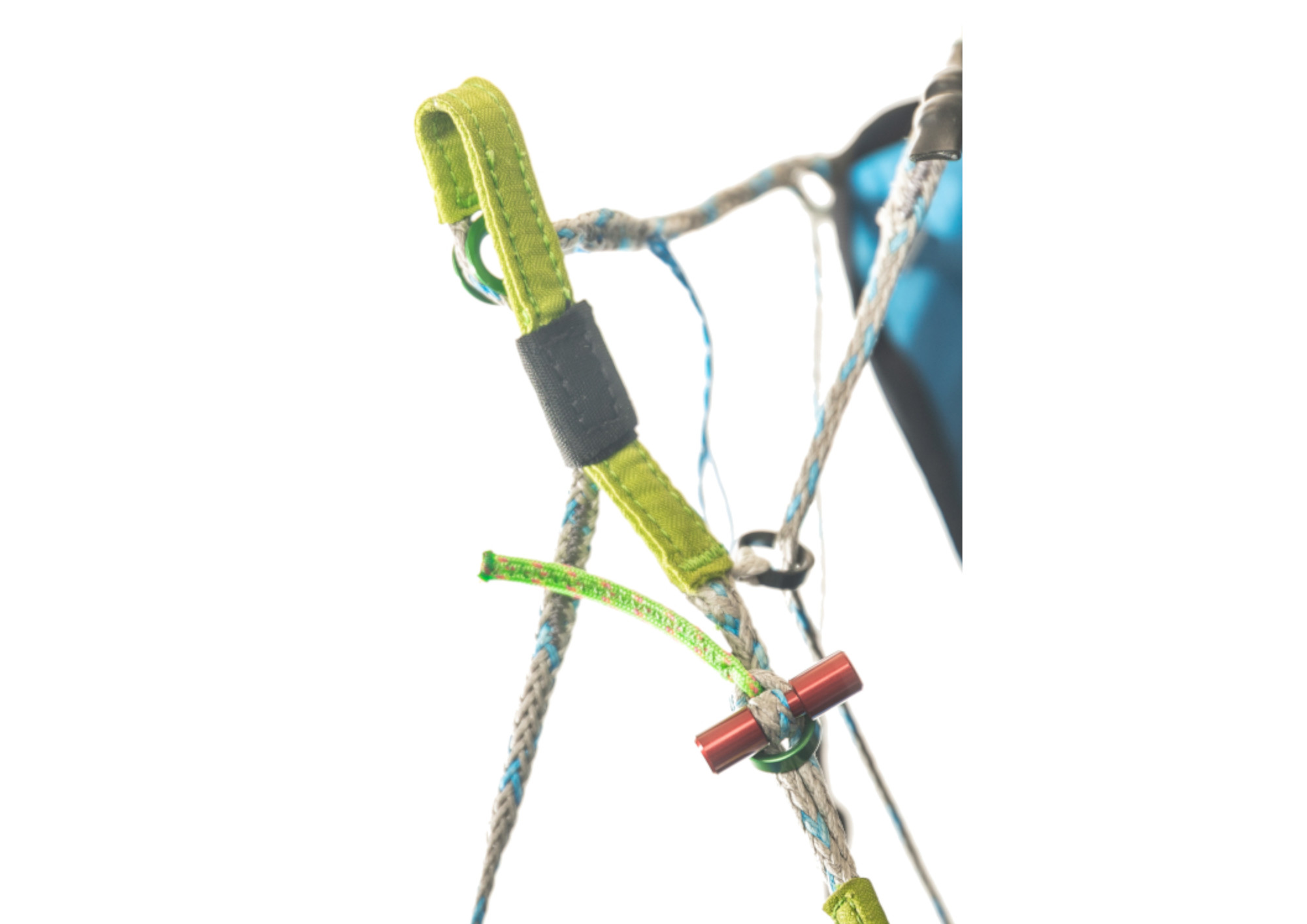
Kruyer III attachment point
WHAT ABOUT TANDEM?
As shown above, soft links are fully suitable for tandem use provided their certified breaking strength is adequate and connecting webbing does not exceed 25 mm width (per our recommendations). Always verify the compatibility between each anchor point (certified minimum strength and webbing width) and the soft link selected.
With a breaking load exceeding 2,400 daN, the T-Bone link easily meets certified demands across all connection roles, whether solo or tandem.