
Thoughts on … Connector Strength and Standards
In paragliding, connectors link our core flight elements: wing risers, harness hang loops, reserve bridles, rescue parachutes, and tandem spreader bars.
They exist in various shapes (square, trapezoid, oval, delta/triangular), materials (aluminum/Zicral, stainless steel, Dyneema soft links), and locking systems (twist-lock, screw barrel, toggle loops).
Each brings specific pros and cons depending on where it is installed. But the question that pilots invariably ask is: what is their breaking strength? Is this connector strong enough for my application?
How can you verify that a chosen model withstands the loads it will encounter? That’s where safety standards come in!
Rigorous certification standards govern paragliders, harnesses, tandem spreaders, and rescue parachutes. Surprisingly, there is currently no standalone paragliding certification standard specifically for connectors, despite them linking the entire system together.
Let us examine the existing norms to determine the required minimum load values across all connection points.
PARAGLIDERS: EN 926-1 & 2 Standards
Part 1 covers structural strength, while Part 2 governs in-flight flight characteristics. We focus on EN 926-1.
Certification entails two structural trials: a violent shock test (1,000 daN to 1,200 daN) where a calibrated mechanical fuse must release without damage to canopy or risers, and a sustained load test towing an inflated wing behind a vehicle up to 8G (8 times maximum certified all-up weight). Upon reaching 8G, the wing is released and inspected for structural deformation. This load distributes across sailcloth, ribs, lines, and ultimately gathers at the risers and their main connecting carabiners.
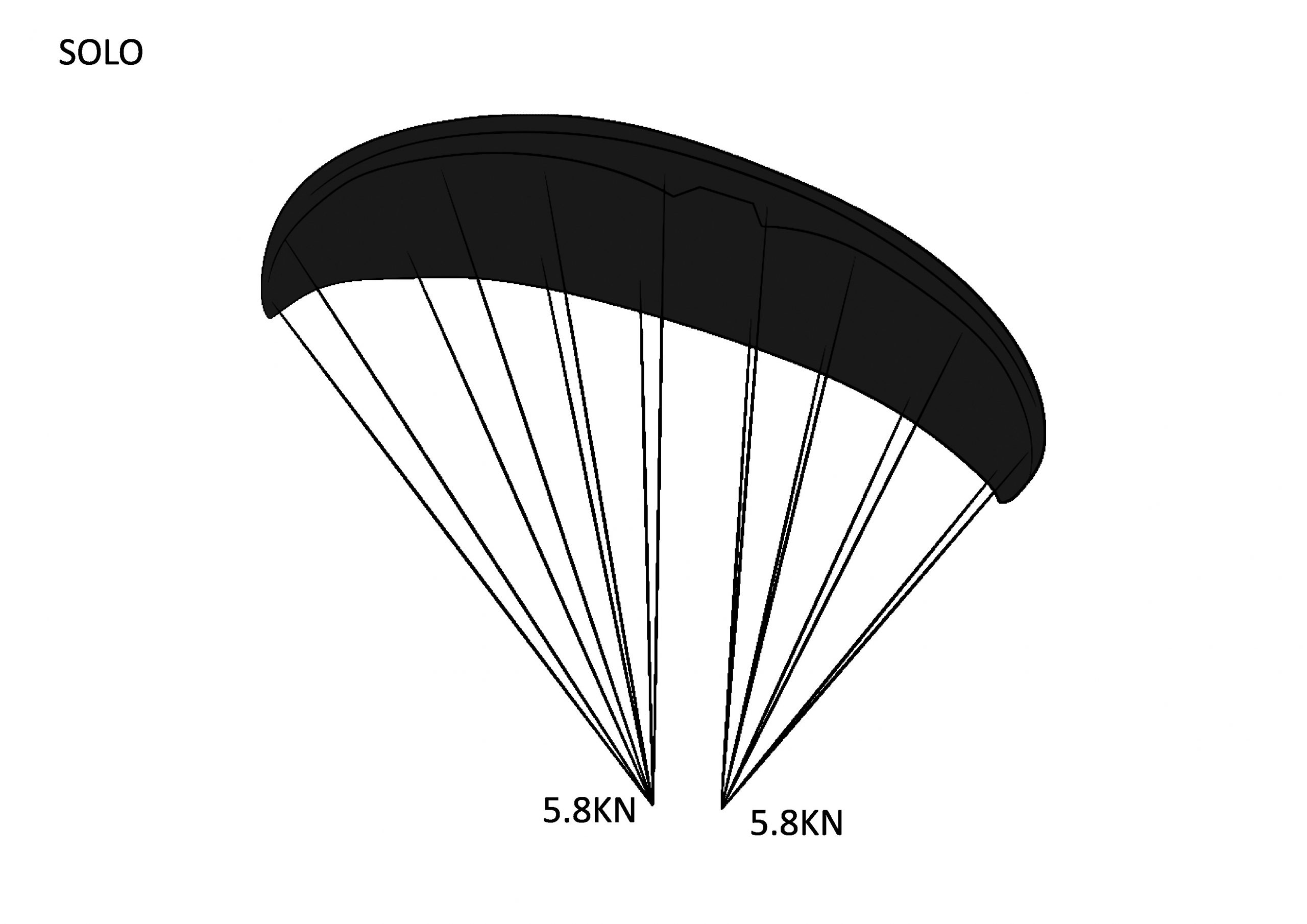
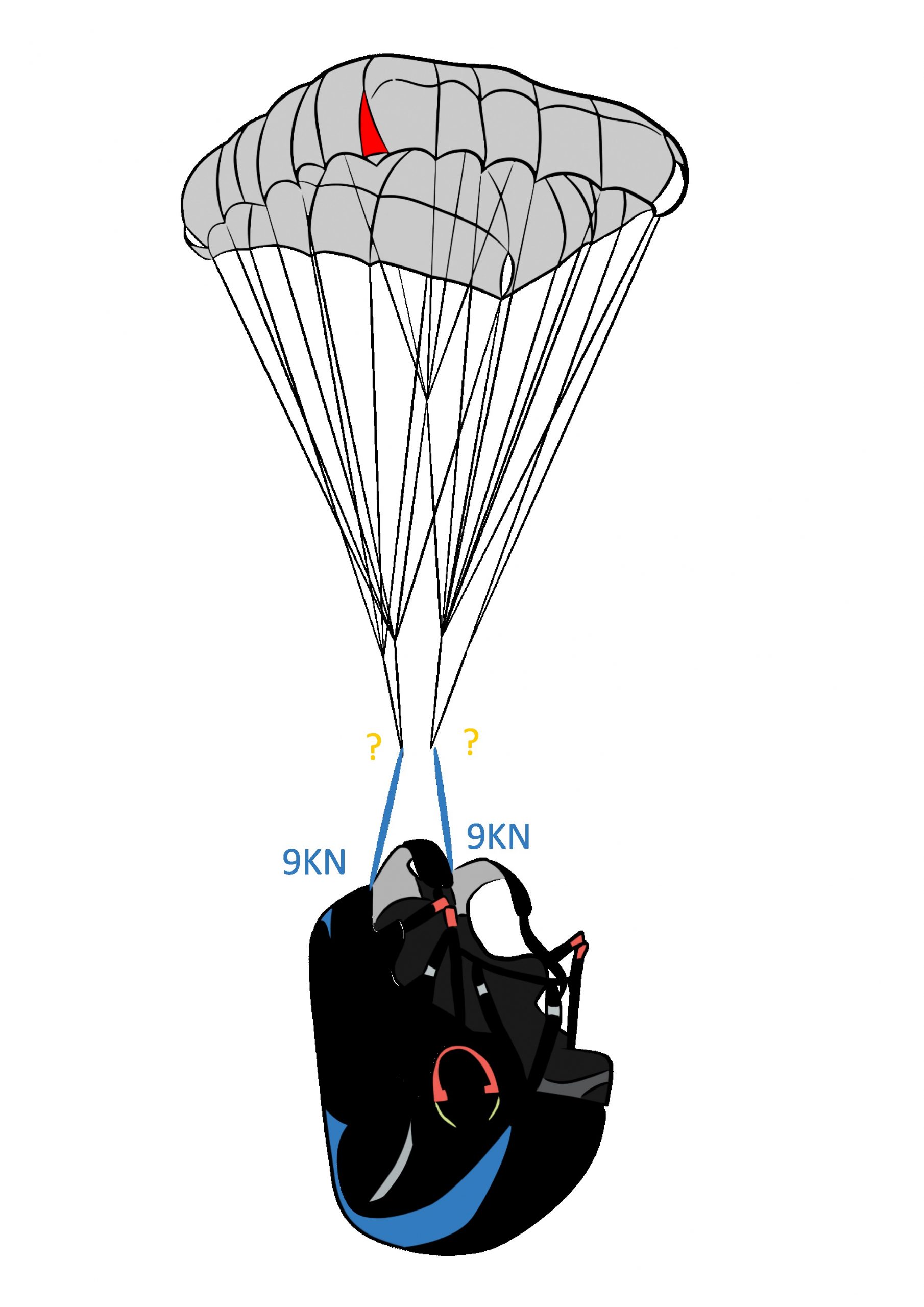
From this test, the required minimum load on each riser (and its connector) is 8 times the maximum all-up weight (AUW / PTV), divided by 2. For a solo glider with 145 kg max AUW, this yields a minimum resistance of 5.8 kN per connector: (8 x 10 m/s² x 145 kg) / 2 = 5.8 kN.
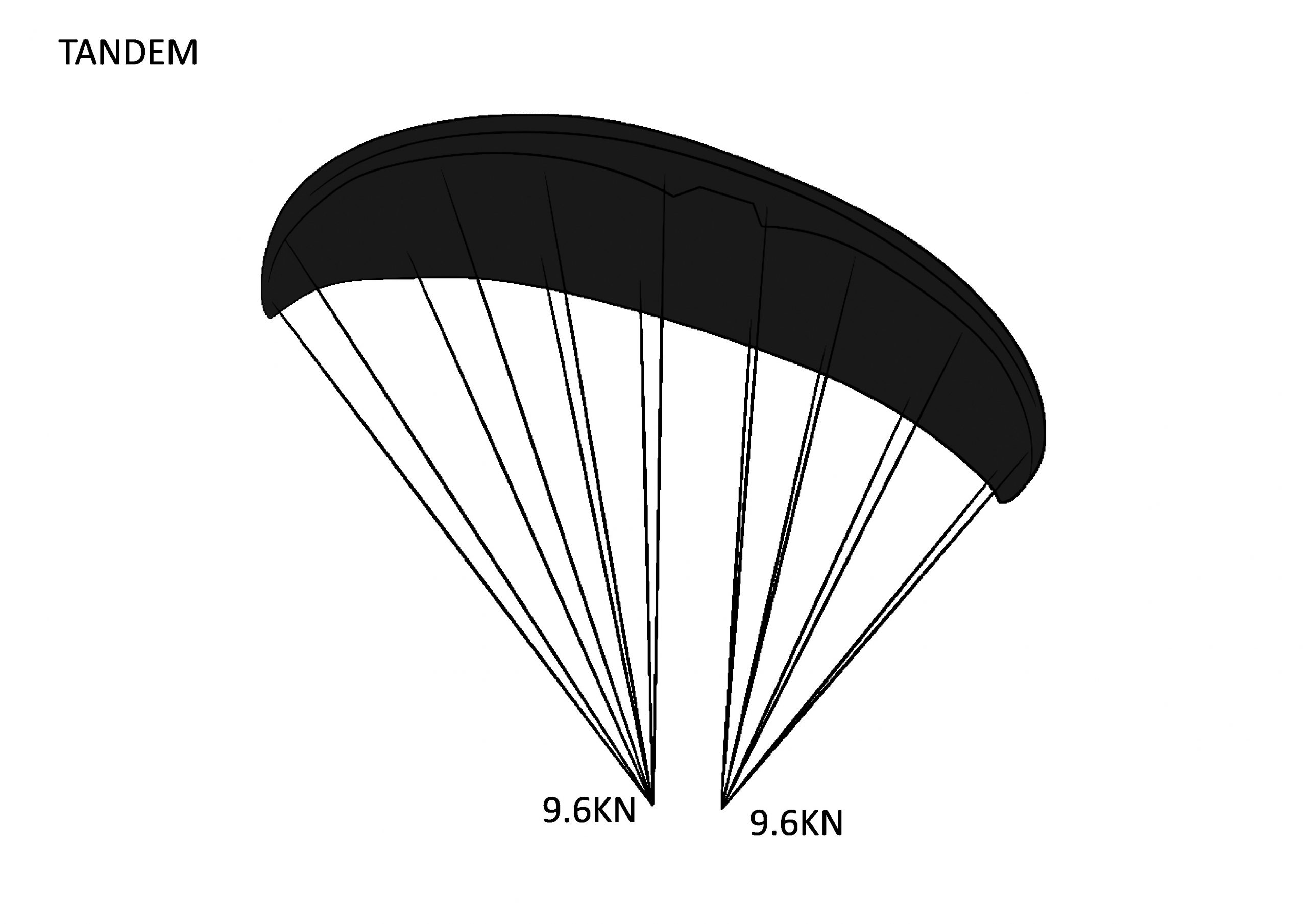
For a tandem glider with 240 kg max AUW tested at 8G, each connector linking spreaders to risers must hold at least 9.6 kN.
SPREADER BARS: LTF NfL II 91/09 Standard
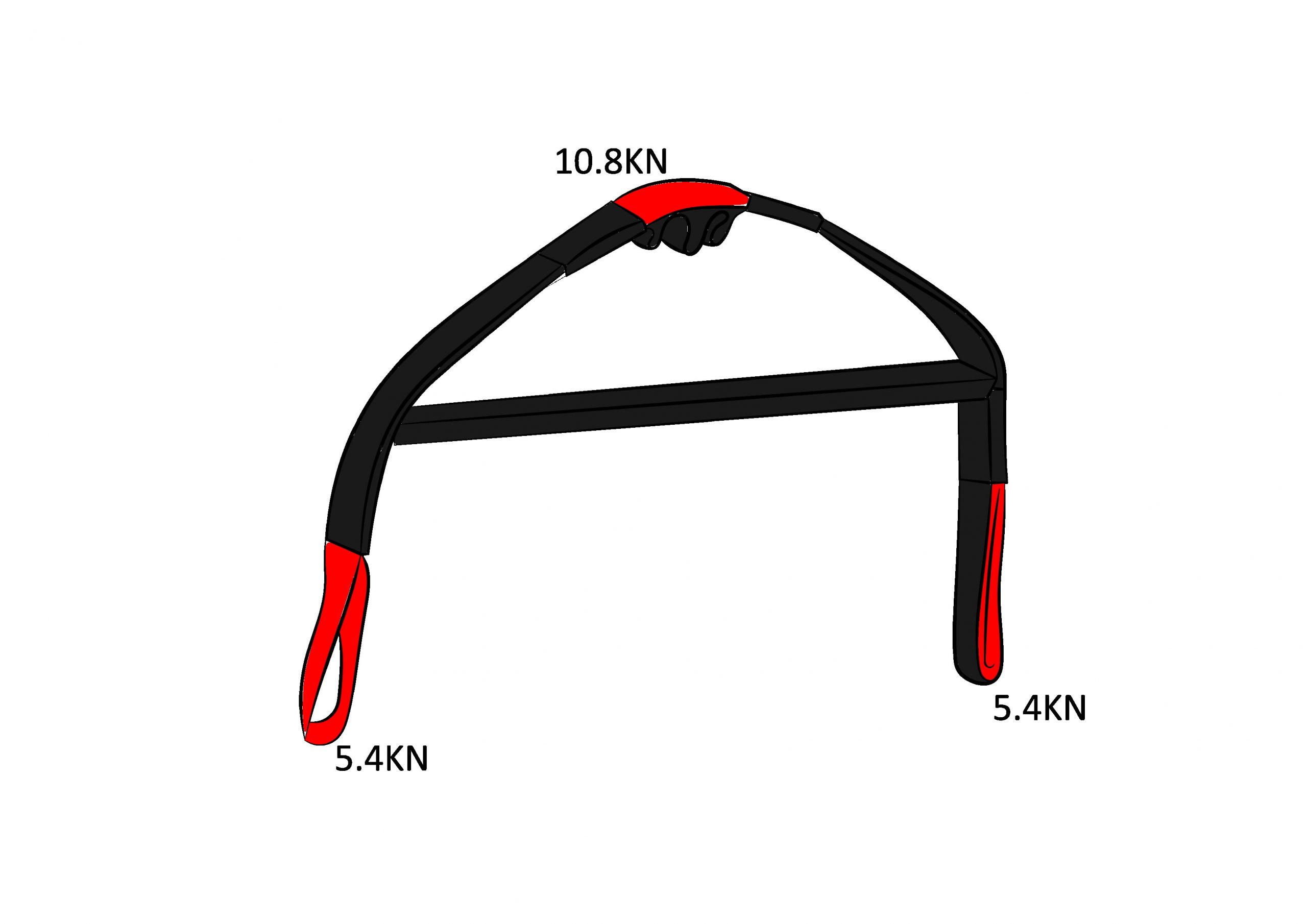
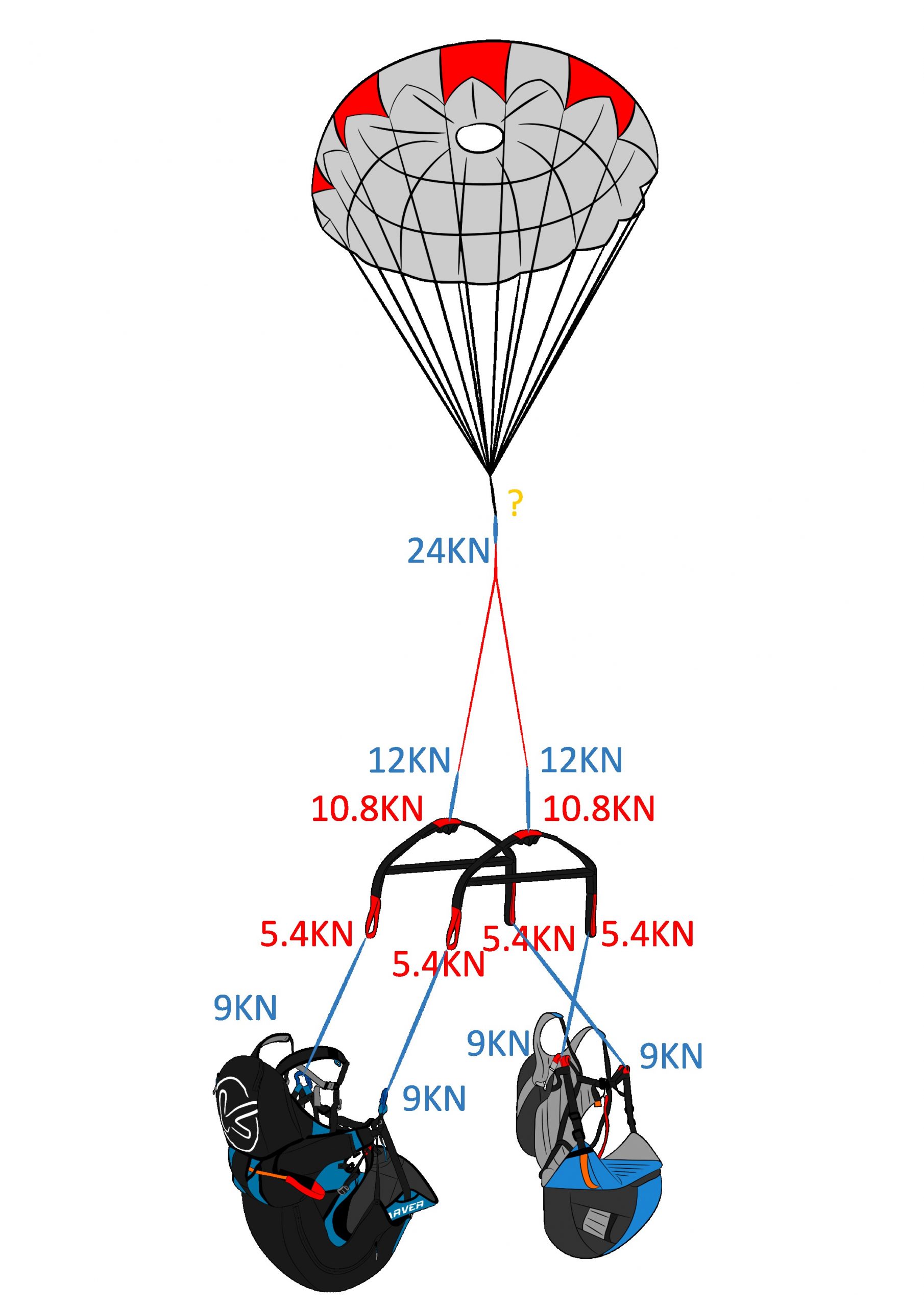
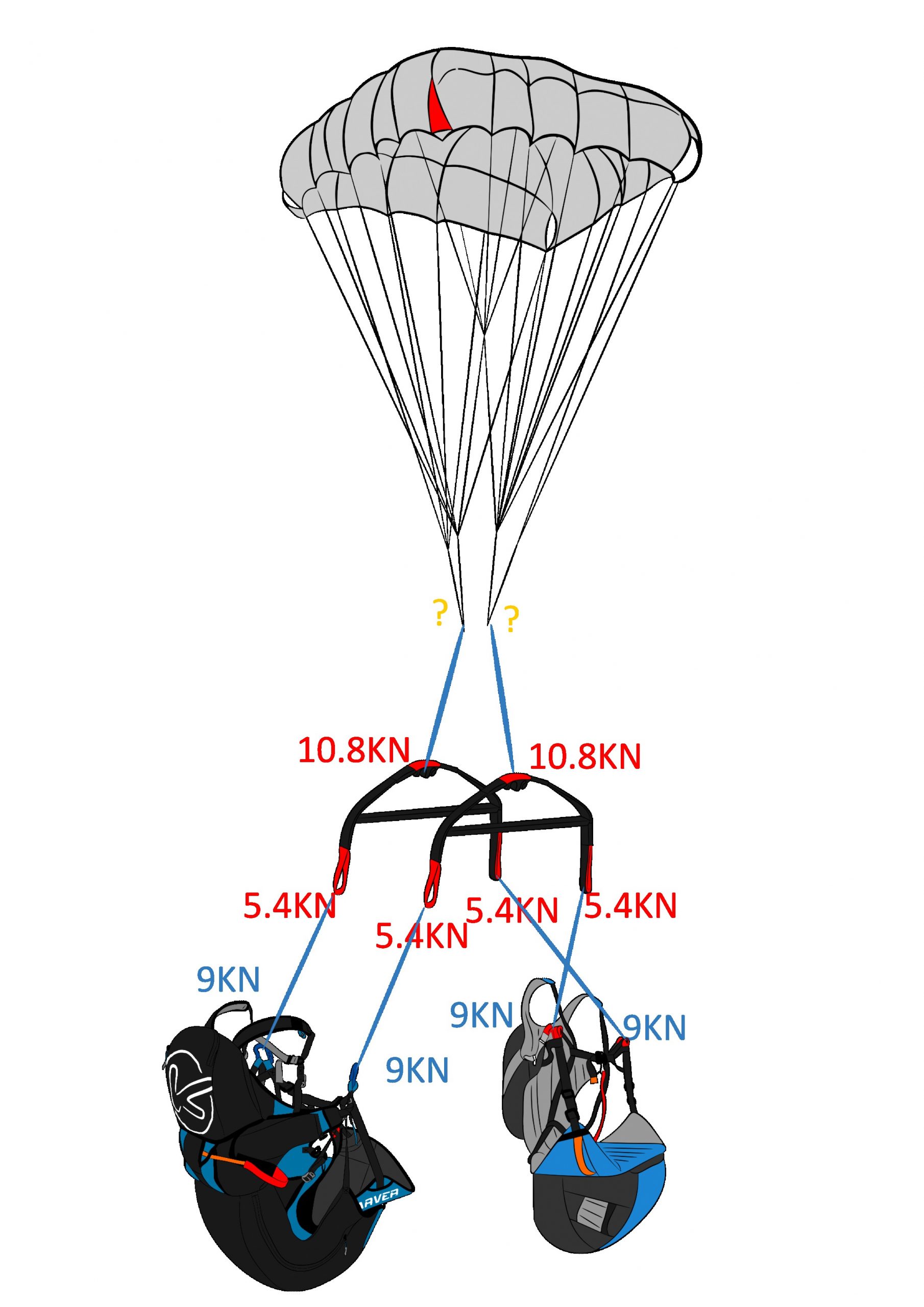
A 9G test load based on maximum tandem AUW is applied to the wing connection point, anchored across pilot and passenger hang points sequentially. Similar tests are conducted on the tandem rescue anchor point. For a 240 kg tandem AUW at 9G, total applied load equals 21.6 kN (with G rounded to 10 m/s²), or 10.8 kN per spreader bar arm.
RESCUE PARACHUTES: EN 12491 Standard
For rescue parachutes and bridles, EN 12491 does not define static load values in kN. Instead, dynamic drop tests deploy the reserve from a test vehicle at 60 m/s. The canopy must open fully and survive the shock without damage. Because no explicit kN value is provided by EN 12491, we must look to harness standards to determine connector strength for rescue systems…
HARNESSES: EN 1651 Standard
The harness is the central hub of free flight equipment, connecting wing and rescue system. EN 1651 is therefore the definitive benchmark for structural connector requirements.
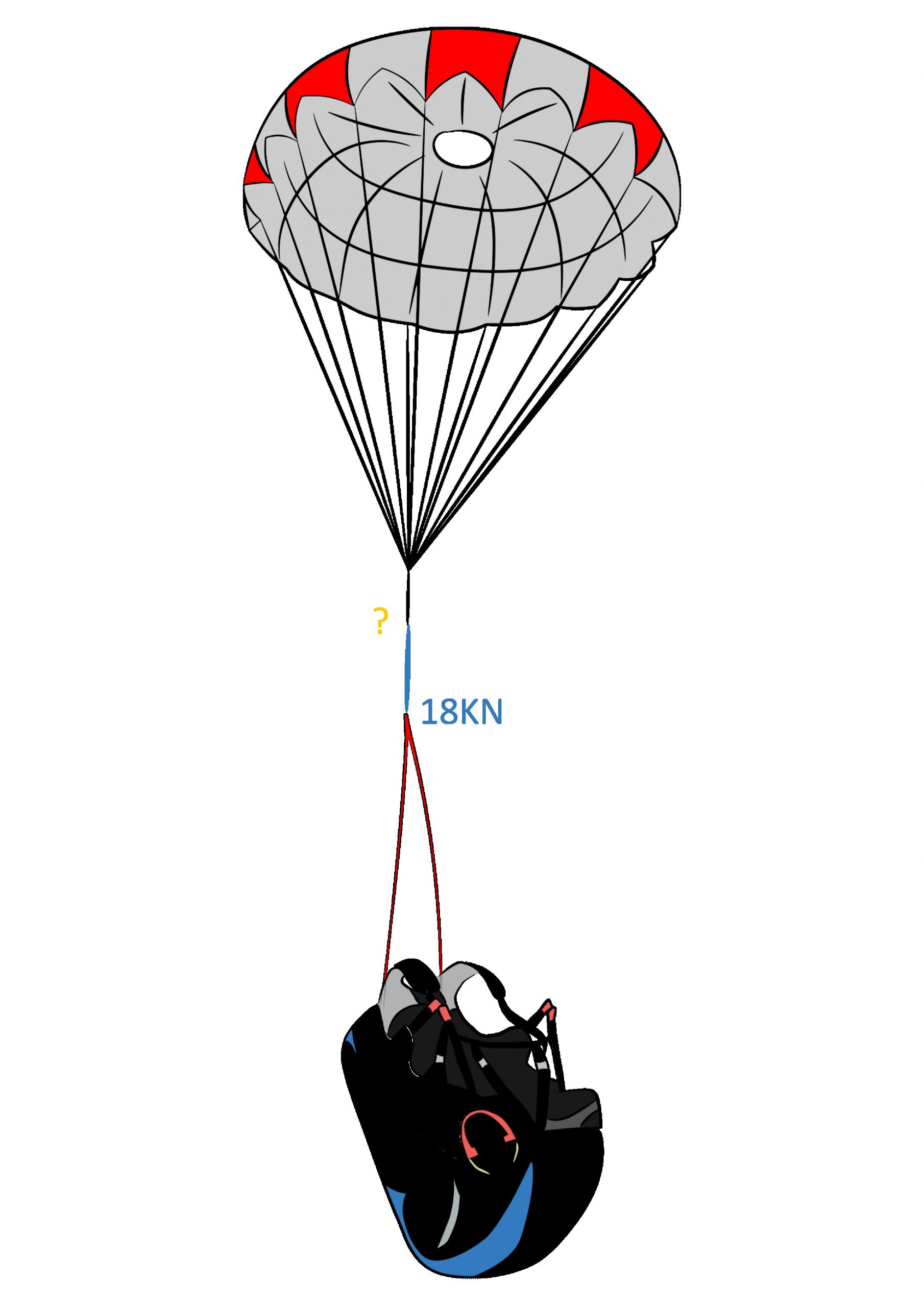
EN 1651 uses a 100 kg reference pilot mass. The peak test load is 15,000 N (15 kN), equivalent to a 15G acceleration. (Recall that wings are tested to 8G). For harnesses certified above 100 kg, loads scale proportionally by (Tested Mass / 100 kg). For a 120 kg certification, the scaling factor is 1.2, elevating the peak load to 18 kN (15 x 1.2 = 18 kN).
For wing attachment points, a symmetrical 15 kN load applies 7.5 kN per carabiner hang point. The same 7.5 kN applies to each shoulder rescue point (or 9 kN each for a 120 kg certified harness).
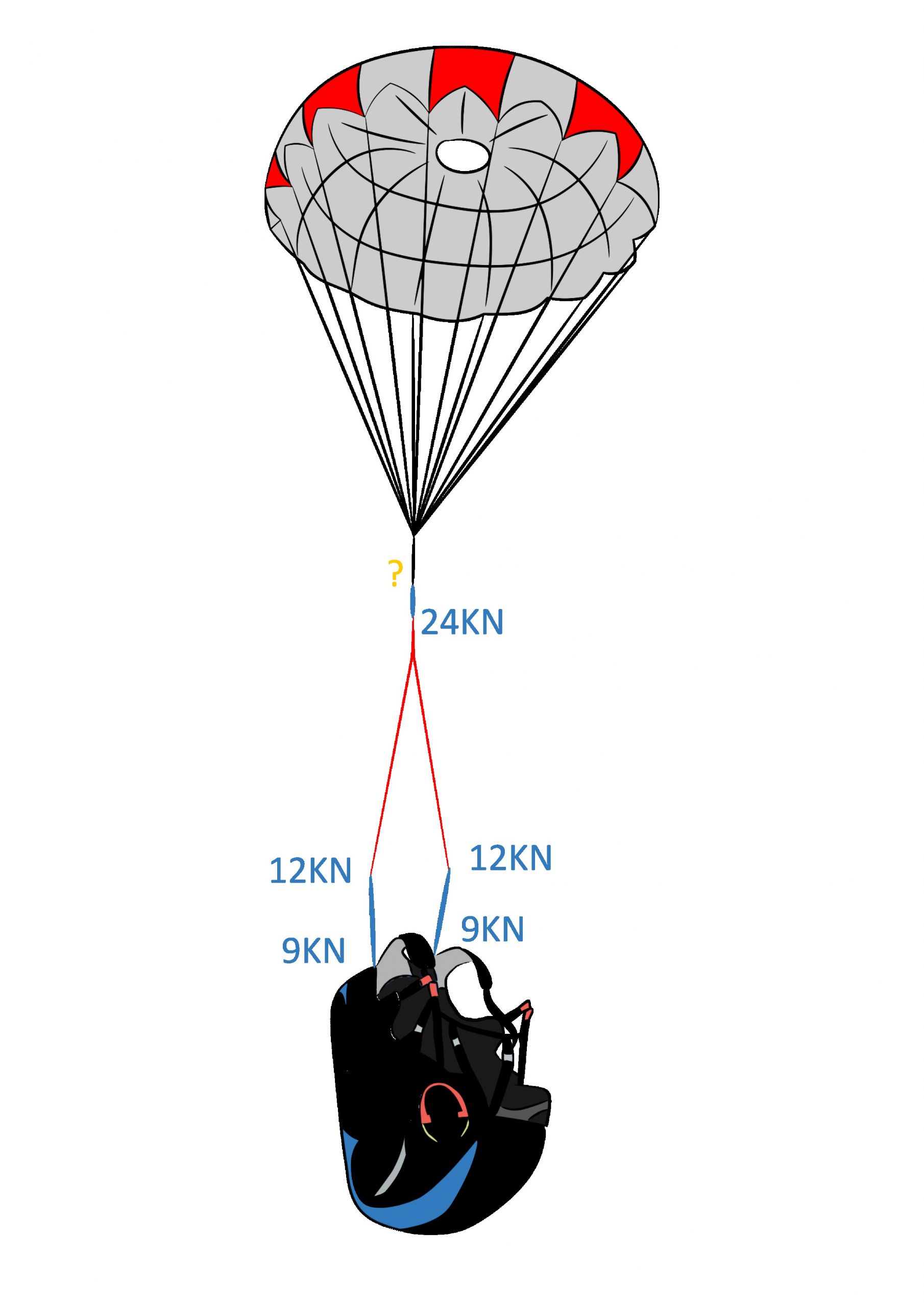
Crucially, EN 1651 introduces a specific rule for rescue bridles: if bridles are permanently sewn into the harness, the test load is 15 kN. If bridles are detachable, the certified test load increases to 24 kN! This requires connectors between harness and detachable bridles to withstand a theoretical minimum of 12 kN per side, or 24 kN at the single junction to the reserve.
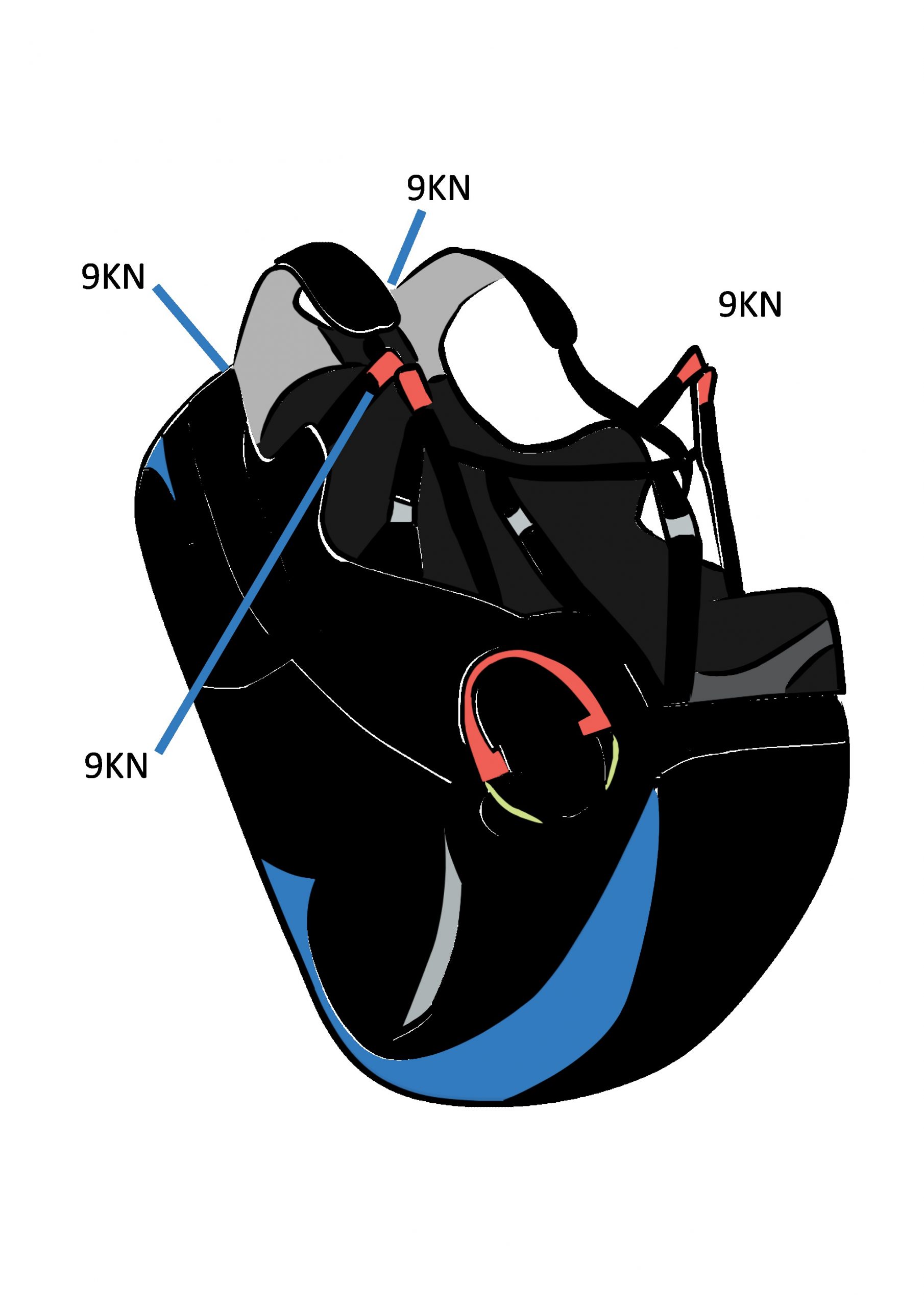
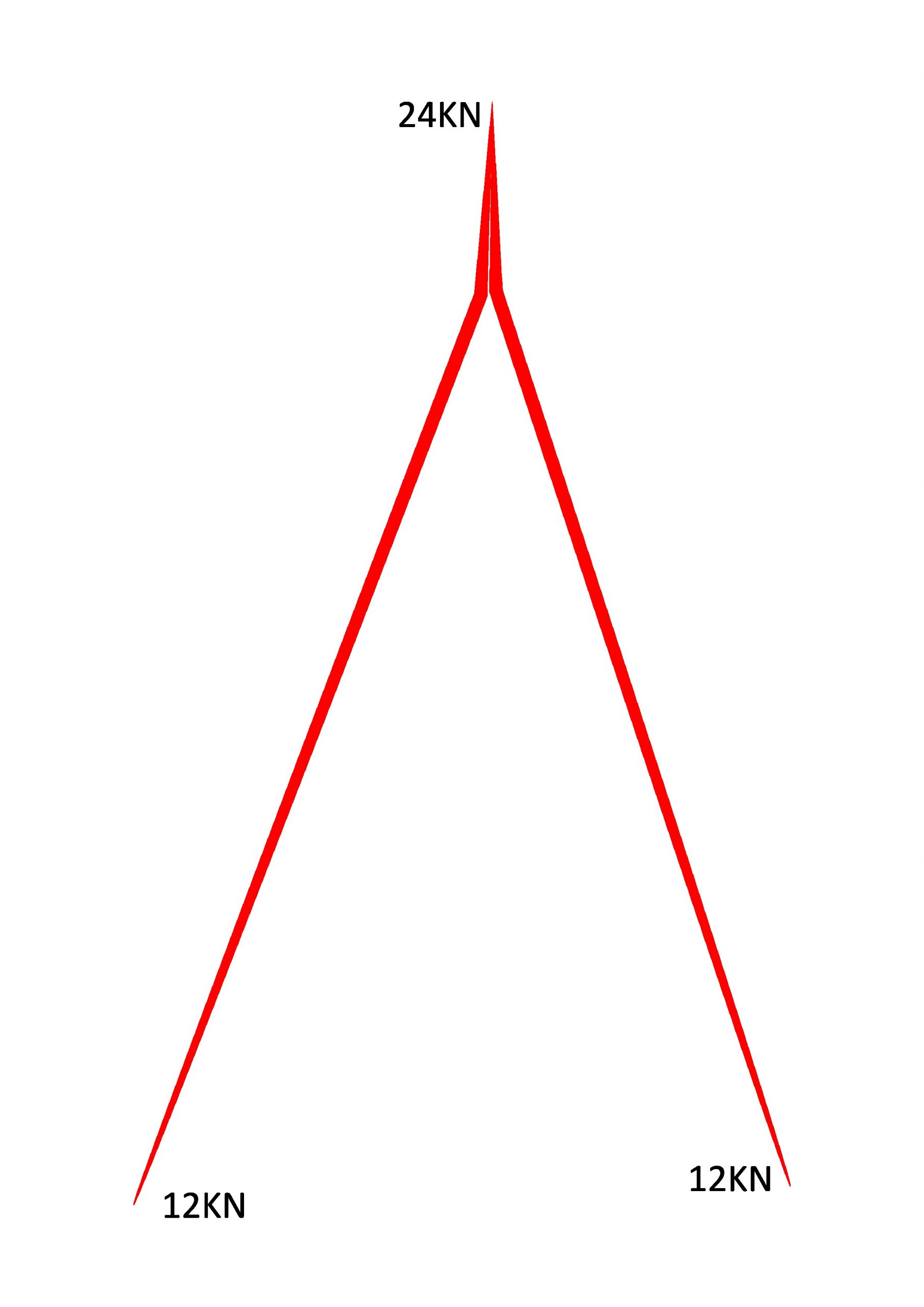
A lot of numbers to navigate, isn't it?
The following diagrams synthesize these values side-by-side, color-coded by standard, showing minimum certified loads at each point in the chain.
Glider Standard: EN 926
SOLO
Max AUW 145kg x 8G = 11.6 kN
TANDEM
Max AUW 240kg x 8G = 19.2 kN
Spreader Standard: LTF NFL II 91/09
Max AUW x 9G (For 240kg = 21.6 kN)
Harness Standard: EN 1651
(For a 120kg pilot mass)
Reserve Standard: EN 12491
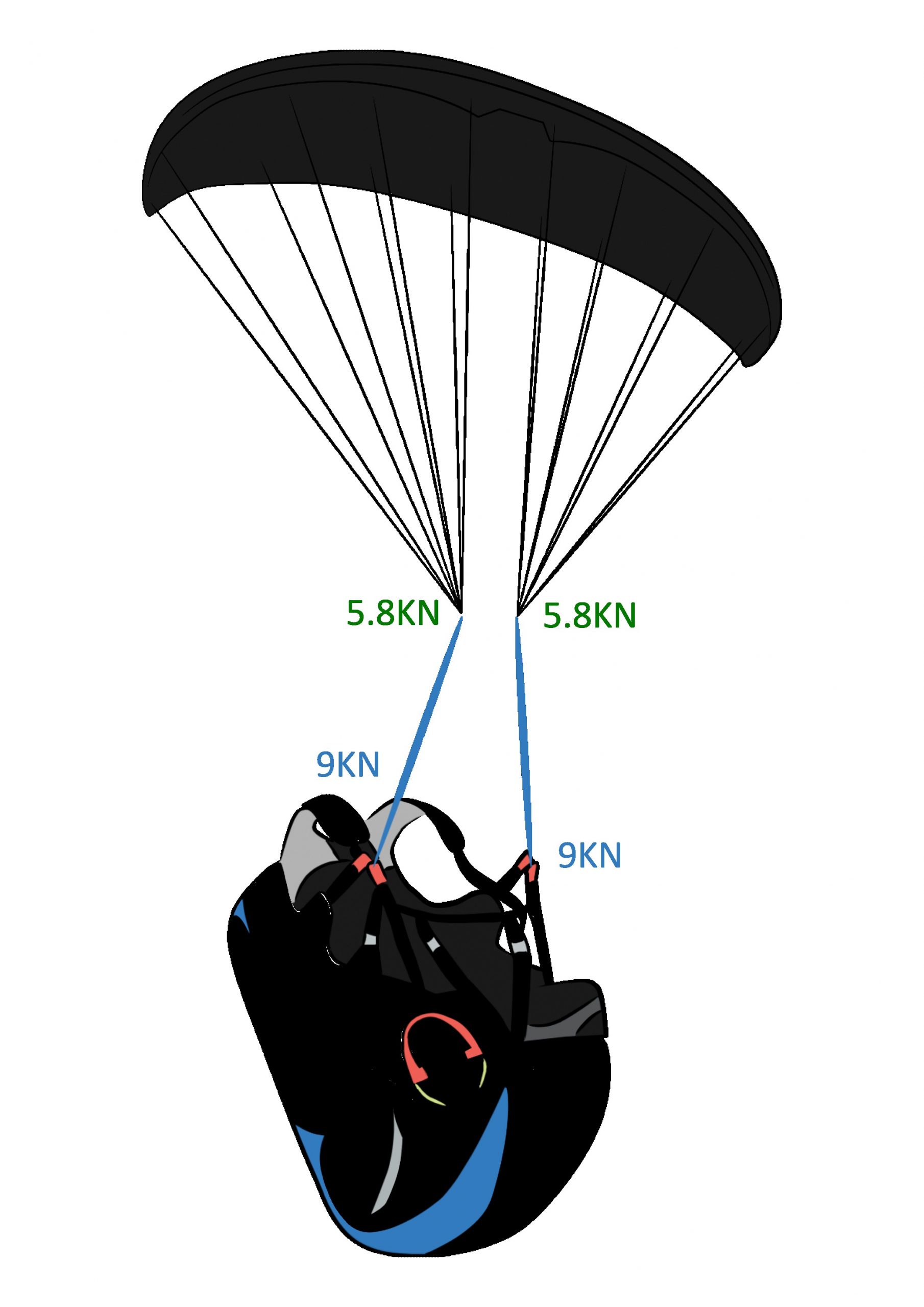
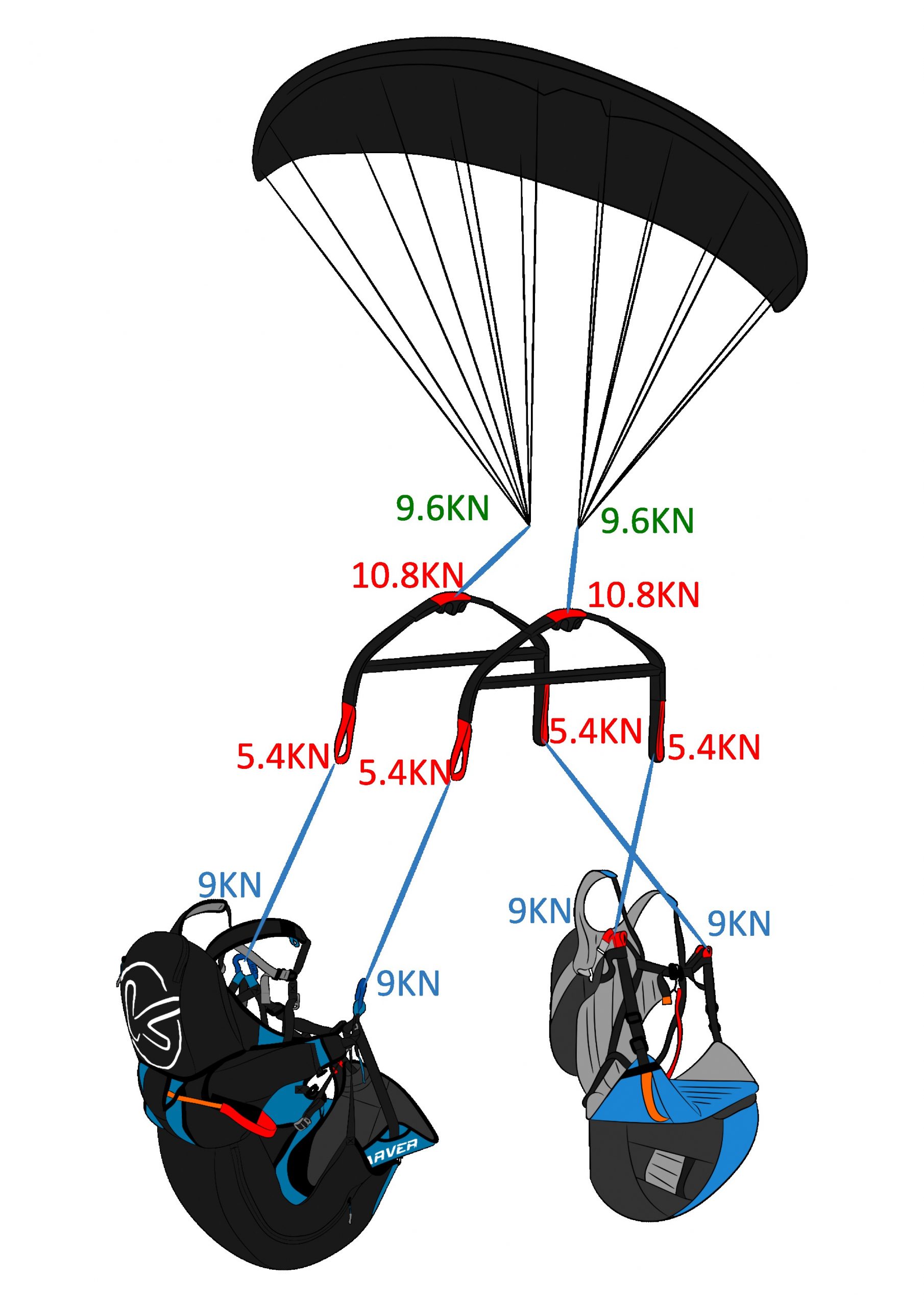
CONCLUSION
Our synthesis establishes the minimum certified connector values required across standards:
– Solo harness / wing connection: 7.5 kN (100 kg harness) to 9 kN (120 kg harness).
– Tandem harness (pilot or passenger) / spreader connection: 7.5 kN to 9 kN.
– Tandem spreader / wing connection: 10.8 kN.
– Solo harness / rescue bridles (if factory sewn-in): 15 kN (100 kg) to 18 kN (120 kg).
– Detachable rescue bridles to reserve canopy: 24 kN (valid for solo and tandem).
– Solo harness / detachable rescue bridles: 7.5 kN (100 kg) to 9 kN (120 kg).
– Tandem spreader / reserve connection: 12 kN.
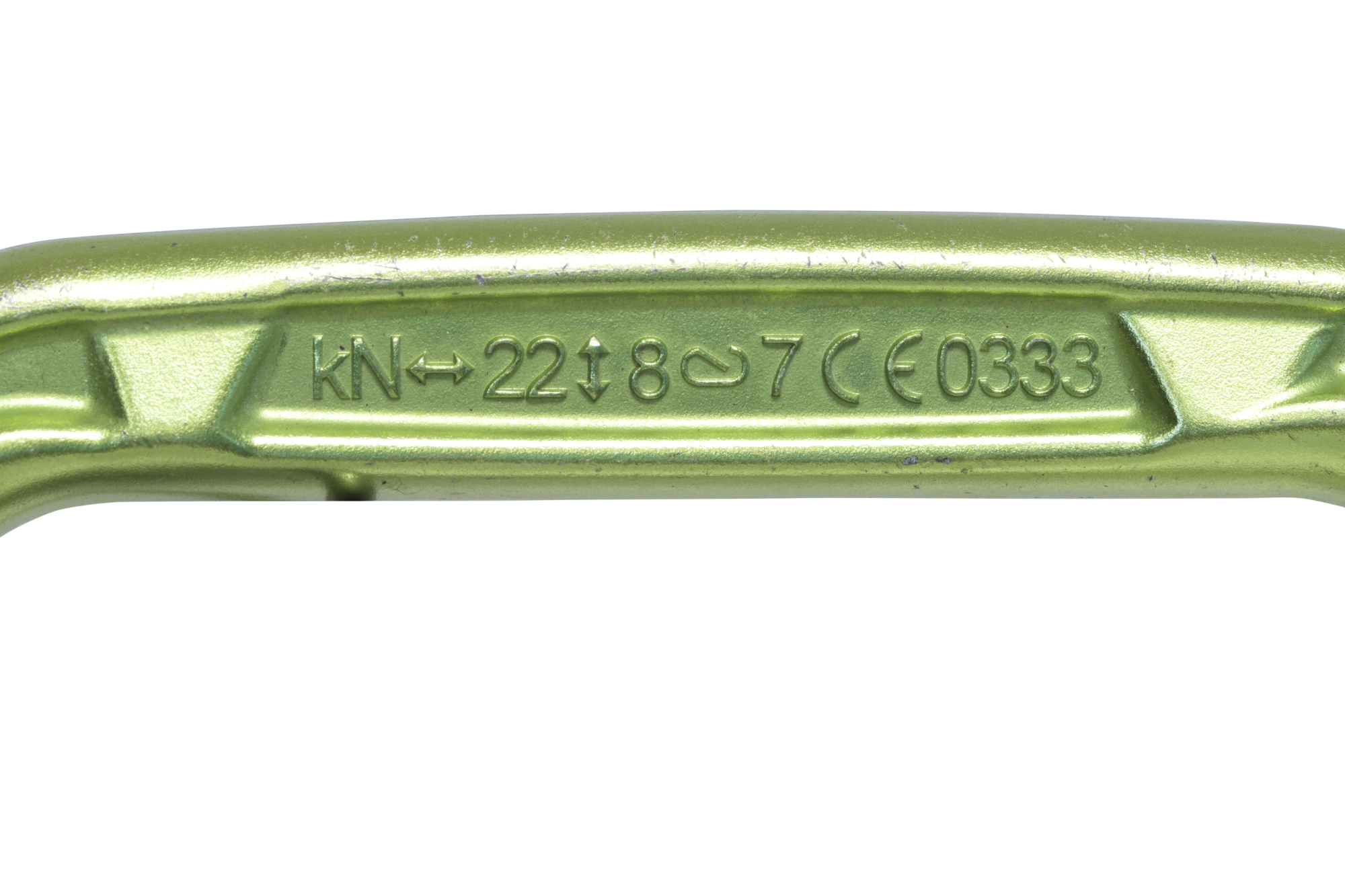
Current market connectors offer certified ratings between 18 kN and 26 kN for Zicral and soft links. Steel maillons reach 28 kN, and specialized Dyneema soft links can exceed 30 kN!
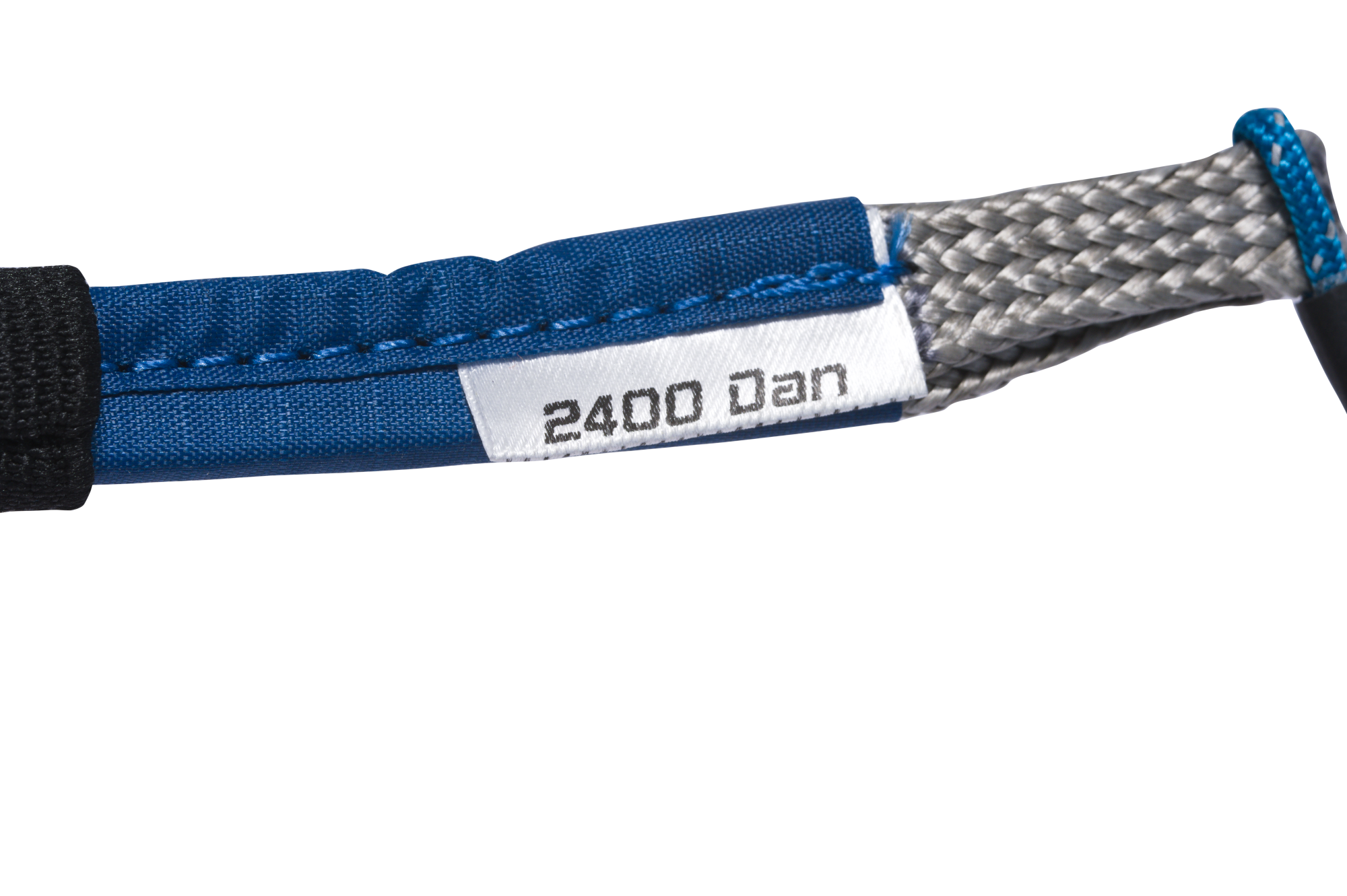
Certified breaking strength values are stamped directly onto metal connectors or printed on sewn labels for textile soft links.
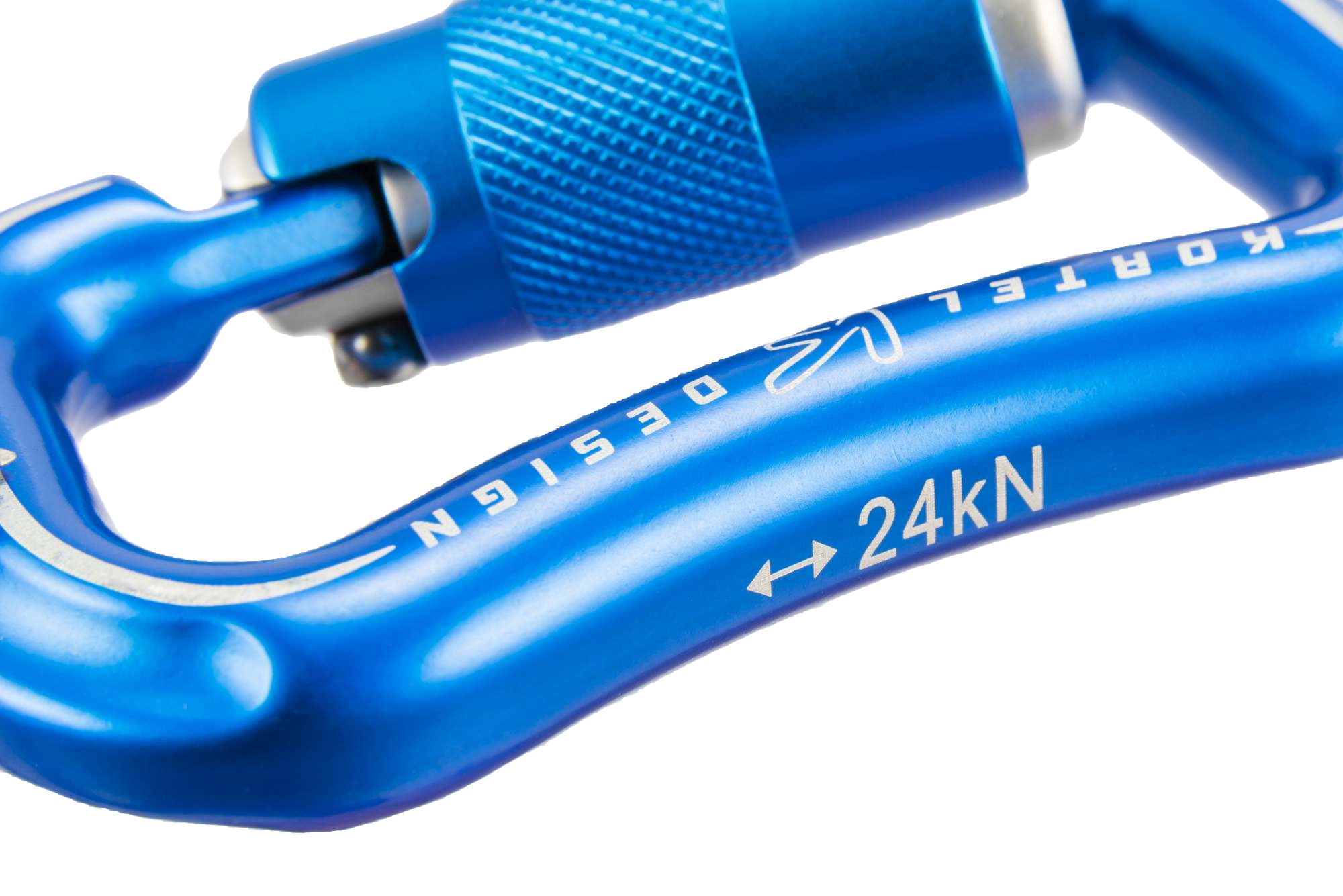
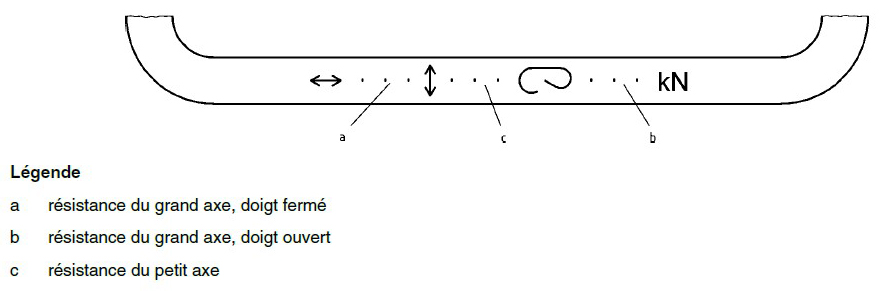
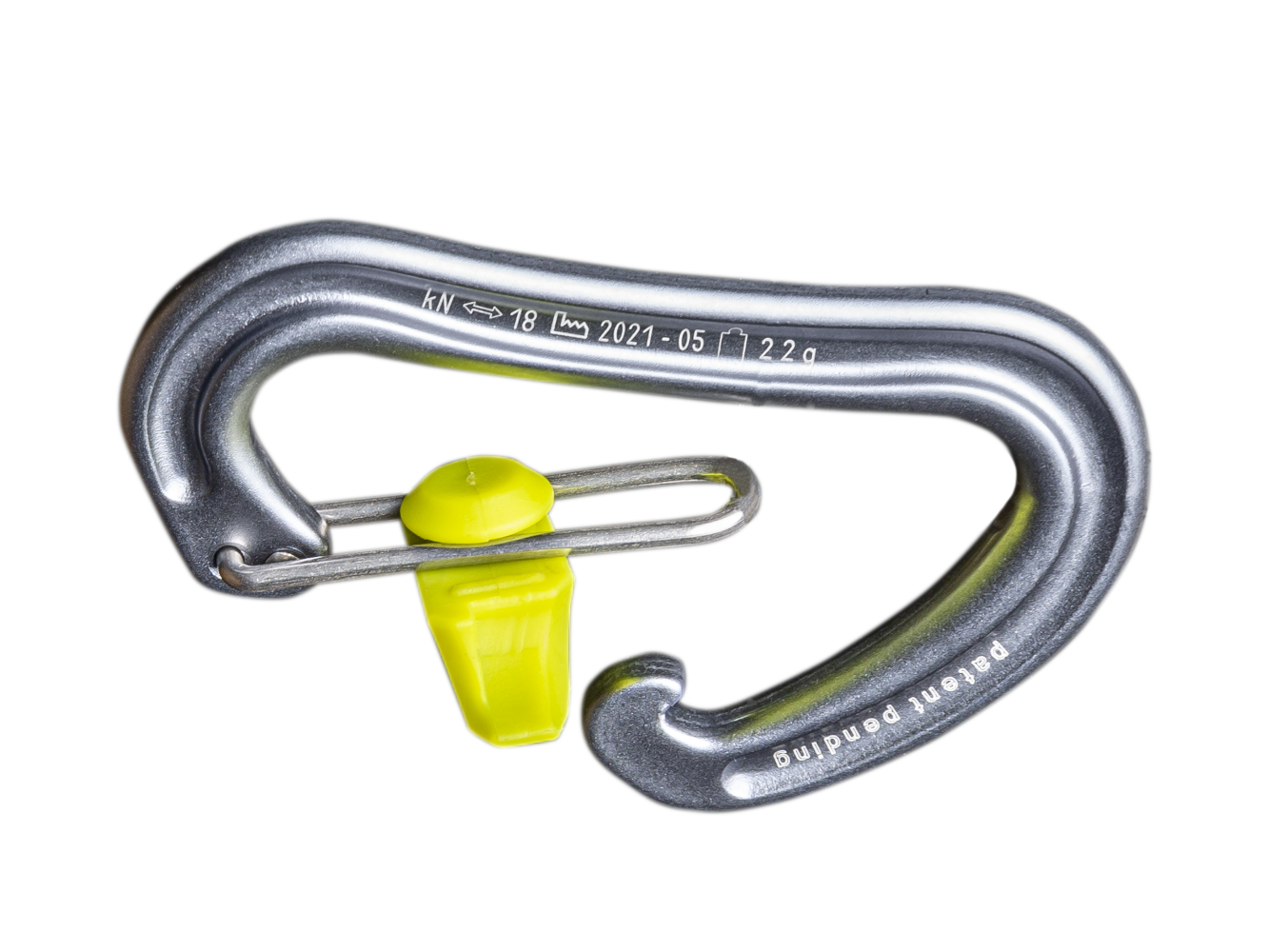
Most modern paragliding connectors are sufficiently strong when loaded along their primary axis. To eliminate any ambiguity across standards, the simplest approach is to use universal connectors rated at 24 kN or higher—the highest threshold across all EN and LTF norms (EN 1651 for independent reserve bridles). In case of doubt, consult the manufacturer directly.
Always evaluate secondary parameters (gate locking mechanisms, cross-loading resistance, fatigue cycling, and webbing slot dimensions) before selecting a connector.
Read our companion article on “Thoughts on … Connectors” for further details.