
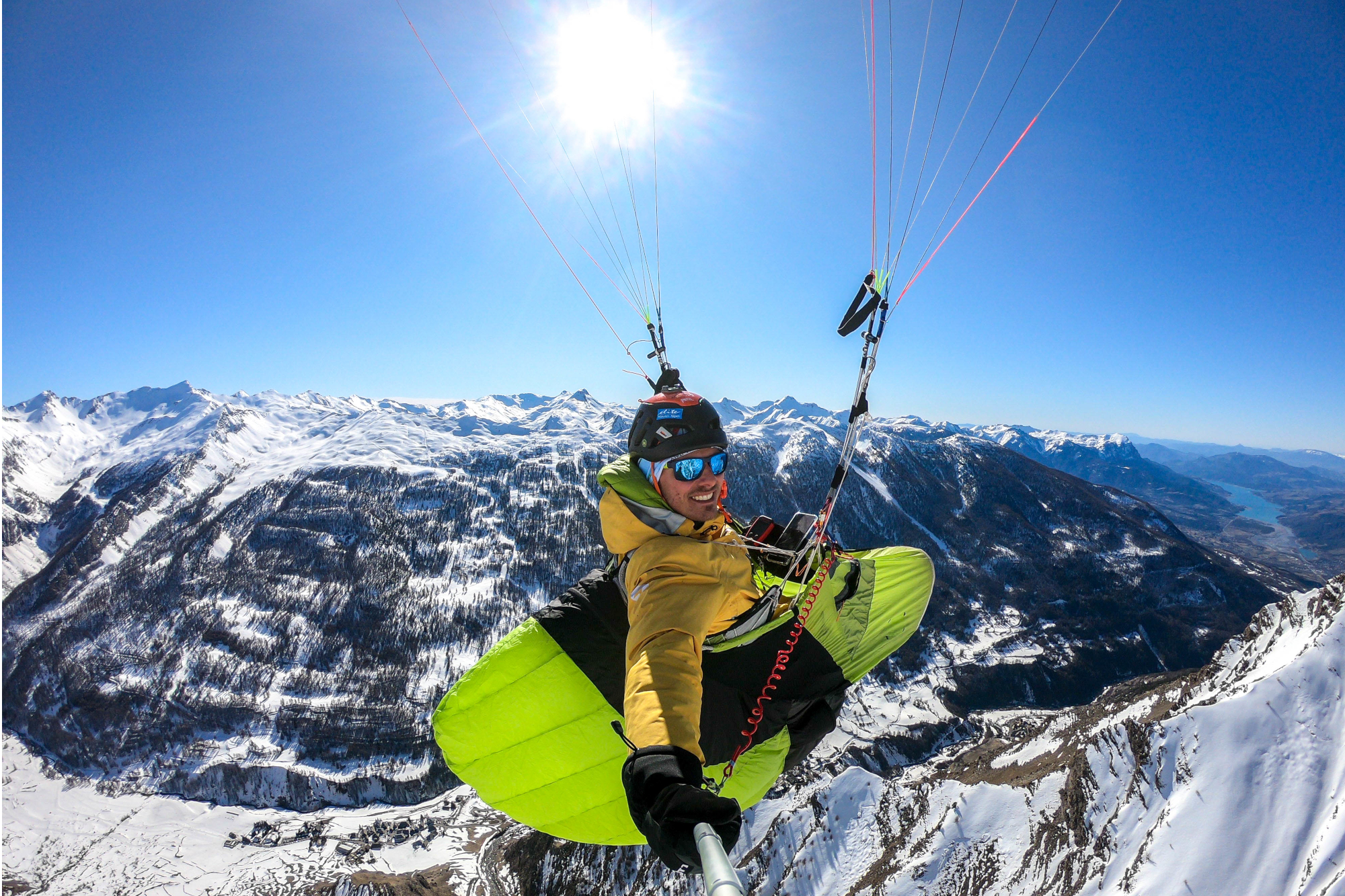
Thoughts on Lightweight Gear …
Current demand from pilots is clearly oriented toward continuous weight reduction in flight gear.
Carrying a compact, featherweight backpack is undeniably far more enjoyable than hauling a boulder up the mountain!
A few years ago, the average paragliding rucksack tipped the scales closer to 20 kg than the 10 kg easily achievable today…
Materials and construction methods have evolved significantly in recent years, unlocking ultralight products that were unimaginable just 10 or 15 years ago (single-skin gliders, string harnesses, X-Alps pod harnesses, compact rescue parachutes, soft links, technical apparel, etc.).
Ultralight gear has consequently become the holy grail sought by virtually every pilot today. However, every coin has two sides, and lightweight gear is no exception. Shaving grams brings tremendous benefits, but it also imposes constraints that must not be overlooked—or at the very least, must be understood and accepted.
Point 1: Durability
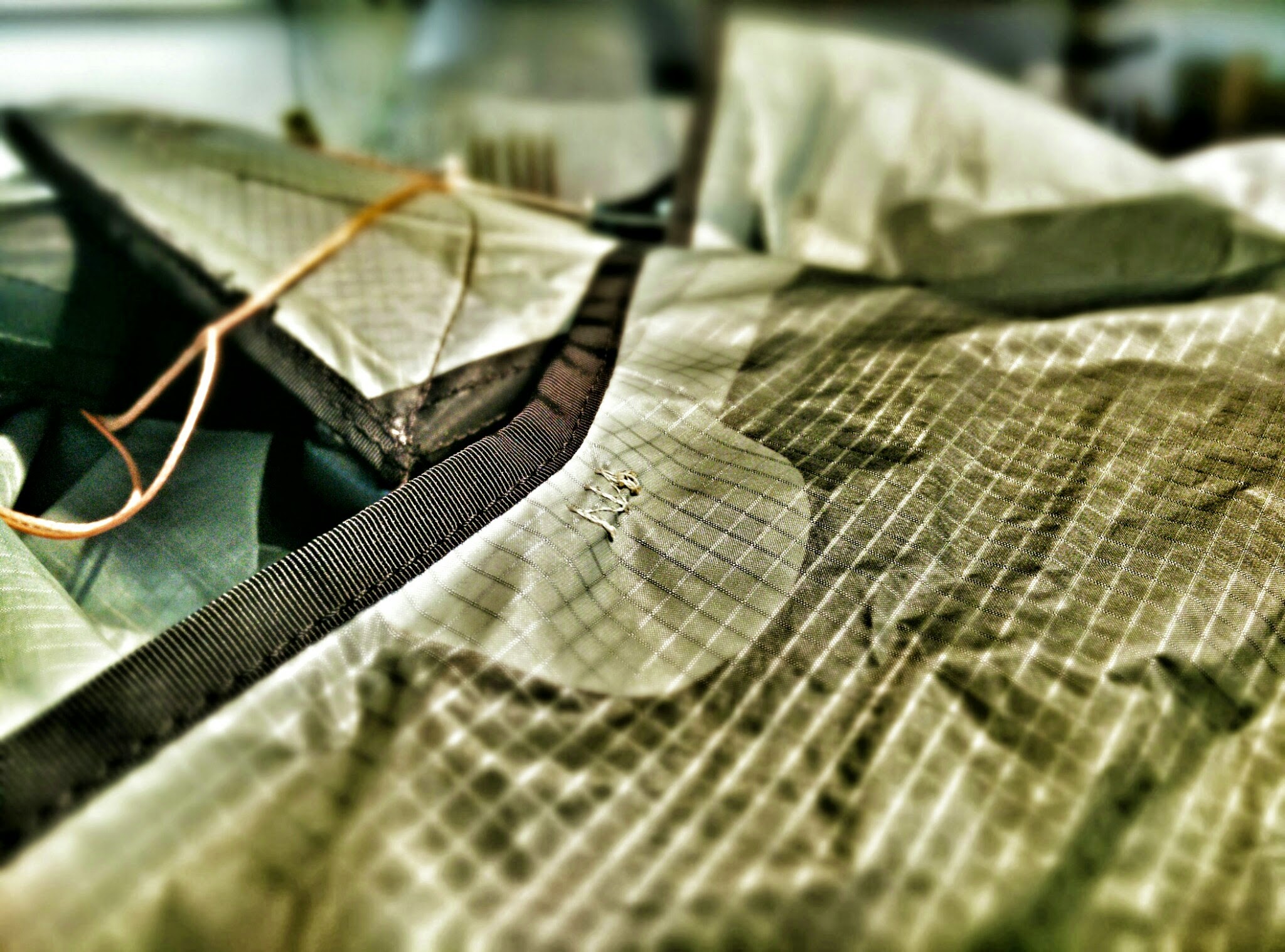
Contrary to what many pilots believe or hope, it is physically impossible for a lightweight harness to match the structural ruggedness of a heavier harness! Despite the remarkable technical evolution of light fabrics, a lower-grammage textile will always remain more delicate than a heavier weave.
Light gear therefore demands particular care to deliver a satisfactory lifespan. This means being mindful of abrasion, sharp terrain, mechanical friction, UV exposure, and so on…
Point 2: Price!
Unfortunately, price is inversely proportional to weight!
Developing specialized ultralight fabrics involves intensive R&D and sophisticated manufacturing processes that are significantly more expensive than standard materials. Combined with the delicacy factor, pilots need to be fully aware of the careful handling required.
Point 3: Piloting Precision
One of the biggest compromises when switching from a traditional seat-board harness to an ultralight model is piloting precision. Ultralight harnesses are predominantly built around hammock or split-leg geometries. These flexible structures do not convey weight-shift inputs into turns with the same crisp, direct authority as a rigid seat board.
Furthermore, these flexible designs lack torsional rigidity, meaning every pilot body movement directly translates to the glider. A prime example: using the speed bar. When pushing the bar, leg movement generates balance shifts in the harness, causing relative displacement between the main carabiner hang points and unintentionally yawing the glider into a turn. This hurts performance when trying to glide cleanly through buoyant air, as micro-inputs disrupt the glider's trim. In a competition harness, a high degree of torsional stiffness is mandatory to filter out parasitic pilot movements, especially on speed bar.
And finally, a widespread myth: Stability vs. Geometry
A common misconception is that light harnesses are inherently unstable. People often conflate light harnesses with minimalist mountaineering string harnesses where both leg loops move completely independently with huge freedom of travel. In reality, it is entirely possible to design a light harness that is exceptionally stable, by fine-tuning strap geometry and cross-bracing.
In fact, hammock-style harnesses are often much more reactive in roll than split-leg designs—a direct result of their structural geometry rather than their weight.

Lightweight gear brings distinct advantages, but also specific trade-offs that every pilot must consider when making their choice.
Listen to Max JEANPIERRE's in-depth interview on the Cloudbase Mayhem podcast (starting at 01:12:24) by our ambassador Gavin McCLURG on www.cloudbasemayhem.com.