Addressing Buckle-Up Failure in Paragliding
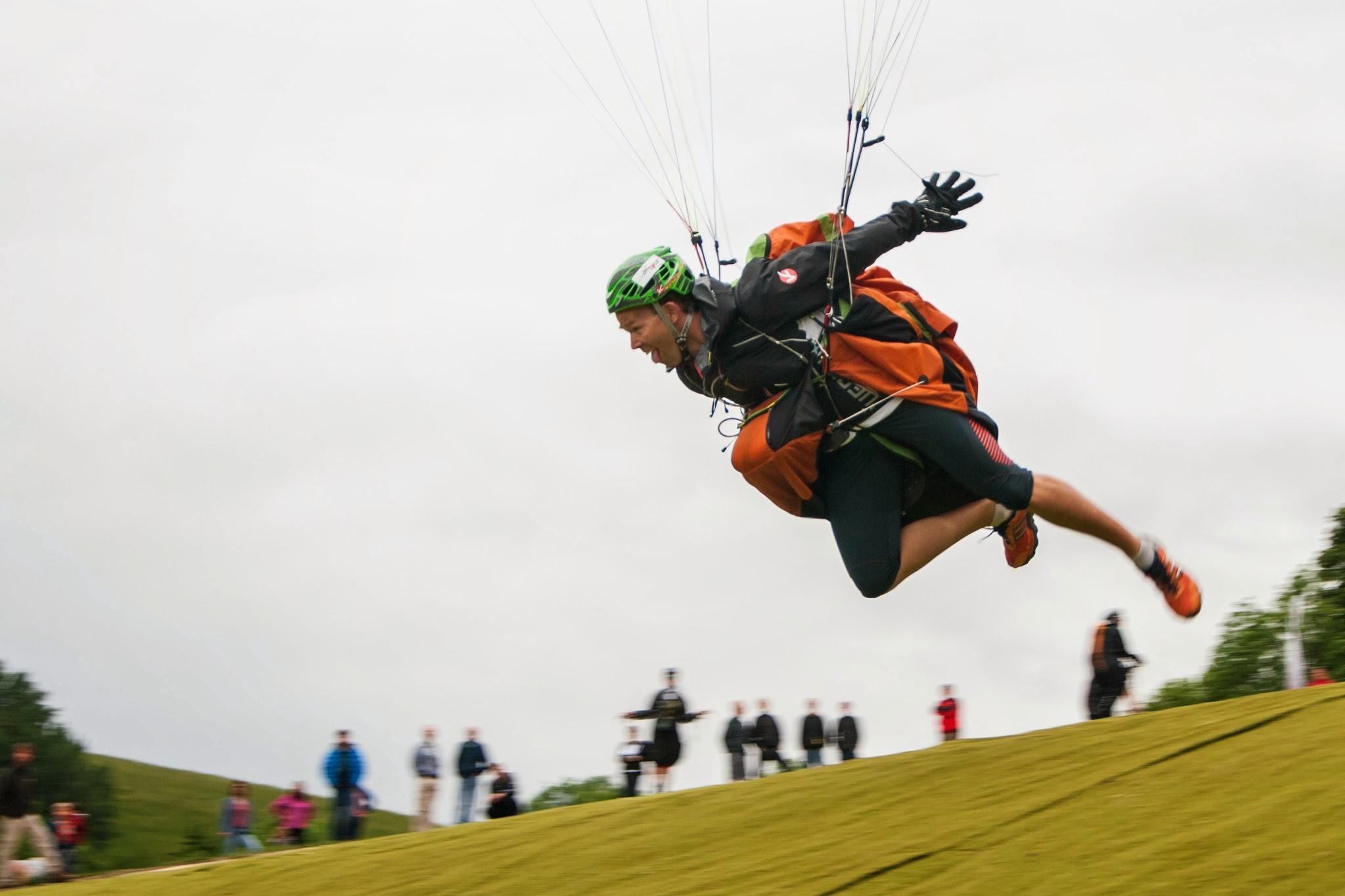
Every year, pilots tragically lose their lives after failing to properly fasten their harness leg straps before launch. Often, these are not novice pilots…
During a safety symposium organized by CDVL74, an audience poll revealed that 15% of attending pilots had launched at least once with leg loops partially or completely unfastened.
CAUSES AND CONSEQUENCES
The root causes of launch oversights are varied and pervasive:
- Interruptions and conversations during launch preparation
- Rushing to launch in closing weather windows
- Fatigue, illness, or sub-optimal physical form
- Personal, professional, or psychological stress
- Aborting a launch attempt and unbuckling leg straps to hike back up the slope
- …
Watch the French Federation (FFVL) safety video: Buckling up is vital!
https://www.youtube.com/watch?v=2bdZJeWiTos
Additional FFVL safety films are available at: https://federation.ffvl.fr/pages/parapente-films-securite
In typical unfastened leg strap scenarios, as the glider inflates and lifts the harness, the entire harness rides up the pilot's back. The chest strap wedges under the pilot's armpits, trapping them in a desperate, unexpected struggle above the ground. If the wing flies away from terrain, the pilot's immediate reflex is to clamp their arms down to hold the chest strap and attempt to fly toward a landing. Unfortunately, this posture cannot be held for more than a couple of minutes: the webbing severely compresses the axillary arteries under the arms, starving arm muscles of oxygenated blood. Inevitably, the arms open involuntarily despite the pilot's utmost willpower…
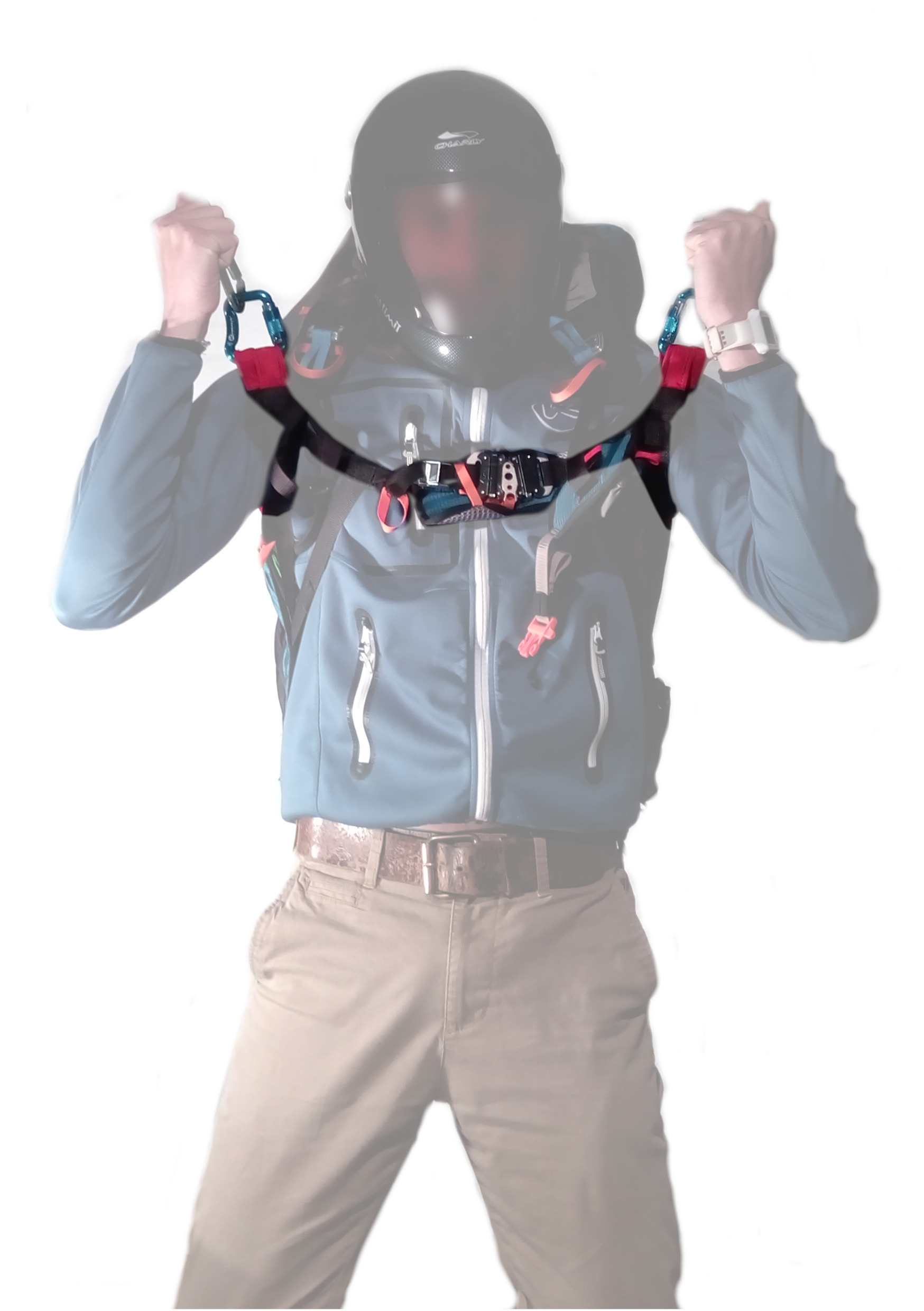
Several emergency survival techniques exist if you ever find yourself in this situation:
- Hooking the risers with your boots to pull your lower body up into the seat. -> Requires athletic fitness, practice, and immediate execution before grip strength fails.
Video demonstration: https://www.youtube.com/watch?time_continue=20&v=j6BKfNpK19U
- Steering immediately back toward the slope or tree canopy for an emergency tree landing. -> However, controlling the glider may be impossible if the brakes were released during the initial shock.
In cases where zero straps were buckled and shoulder strap friction initially mimicked being strapped in: as the harness rises at launch, raising both arms allows the harness to slip completely off overhead without trapping the torso, or stalling the glider immediately while still touching the launch ground.
Watch: A pilot slips free from their harness on launch upon realizing they are not strapped in:
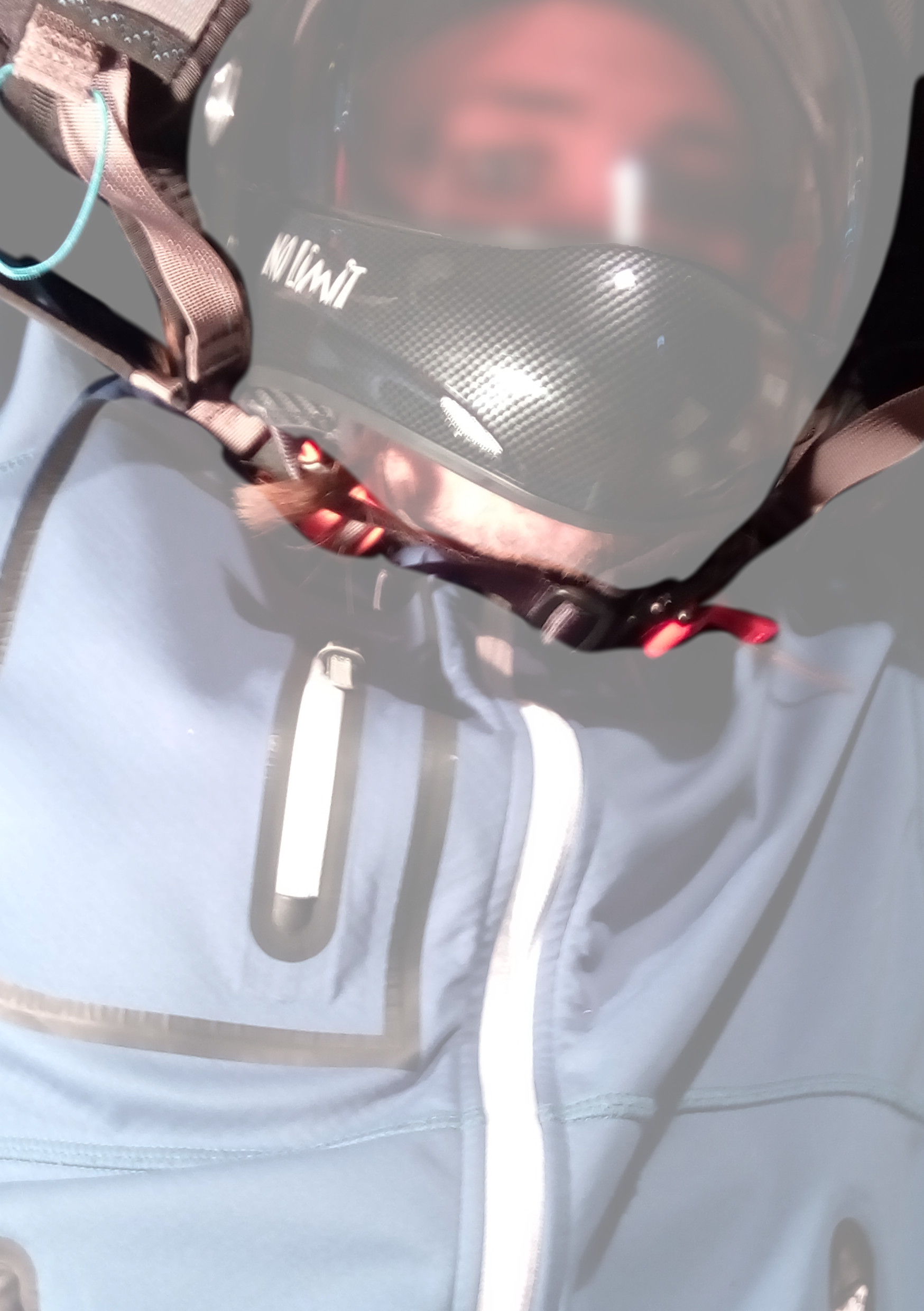
Beware also of sternum chest clips: despite their lightweight plastic construction, they can catch beneath the chin guard of a full-face helmet or under the neck, trapping the pilot in an asphyxiating hold and preventing the harness from cleanly sliding away.
While human error is the root cause of these accidents, manufacturers bear a responsibility to engineer technical safeguards that eliminate single-point human failure.
The technical solutions outlined below summarize industry approaches to harness closure safety.
TECHNICAL SAFEGUARDS: Harness Geometry
Harnesses with Separate Leg Straps and Chest Strap
This traditional geometry is well known to most pilots—and historically poses the highest risk of unfastened accidents!
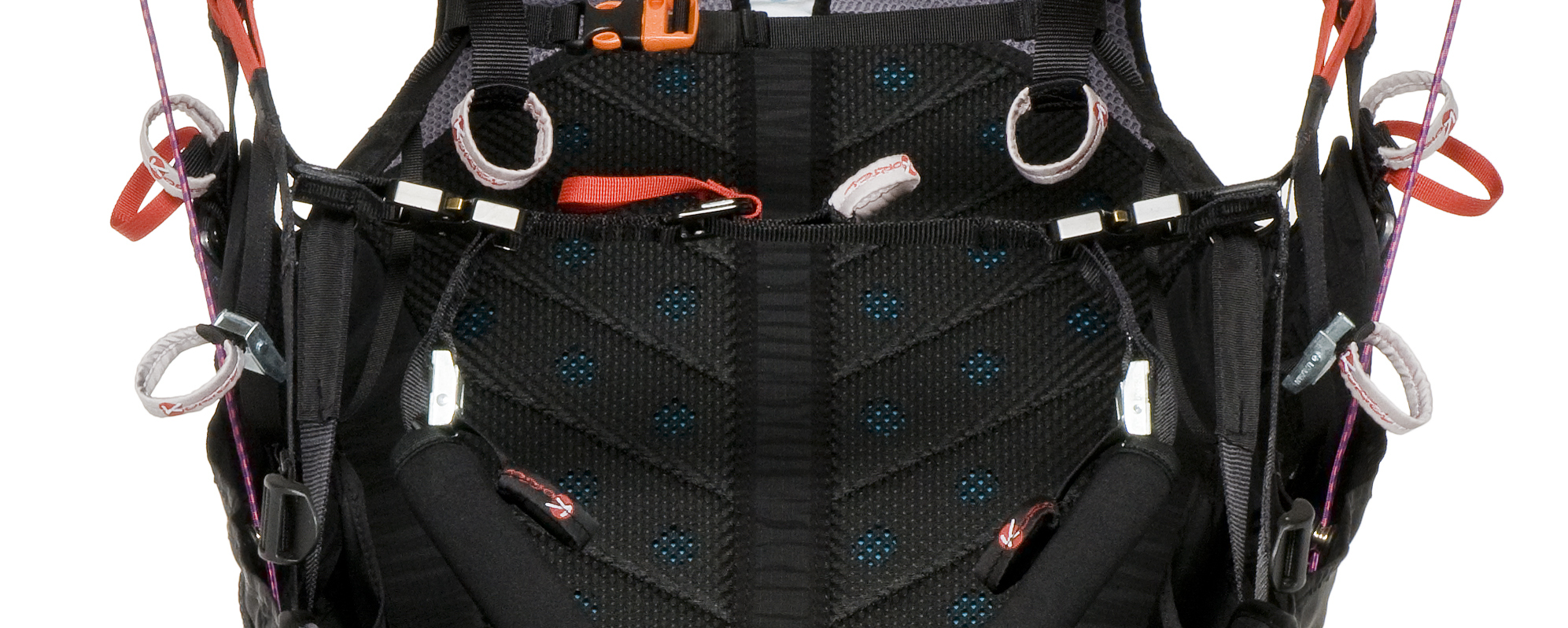
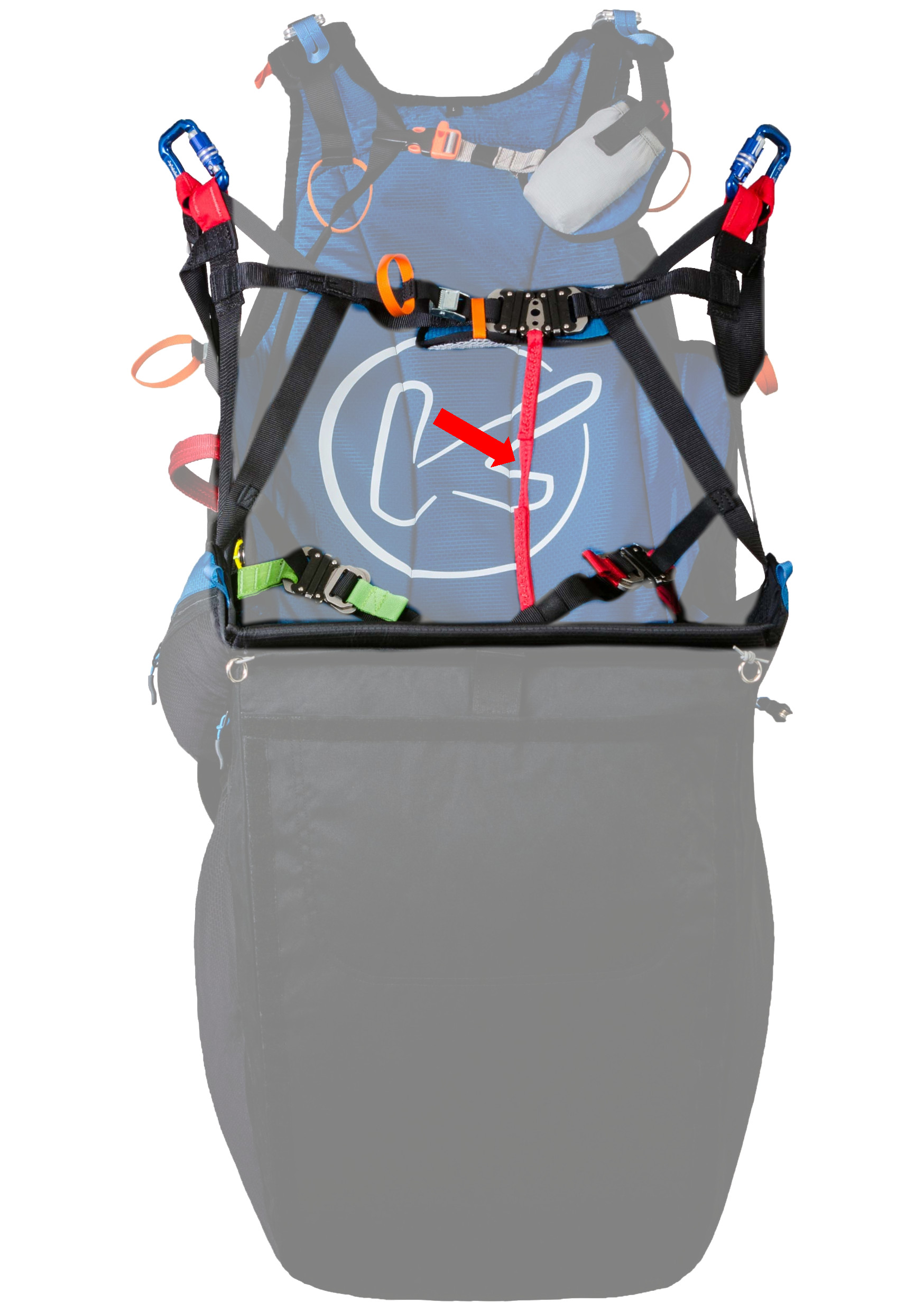
It requires fastening three separate points: the chest strap and two leg loops. Leg straps are the critical safety element: they prevent the harness from riding up your back.
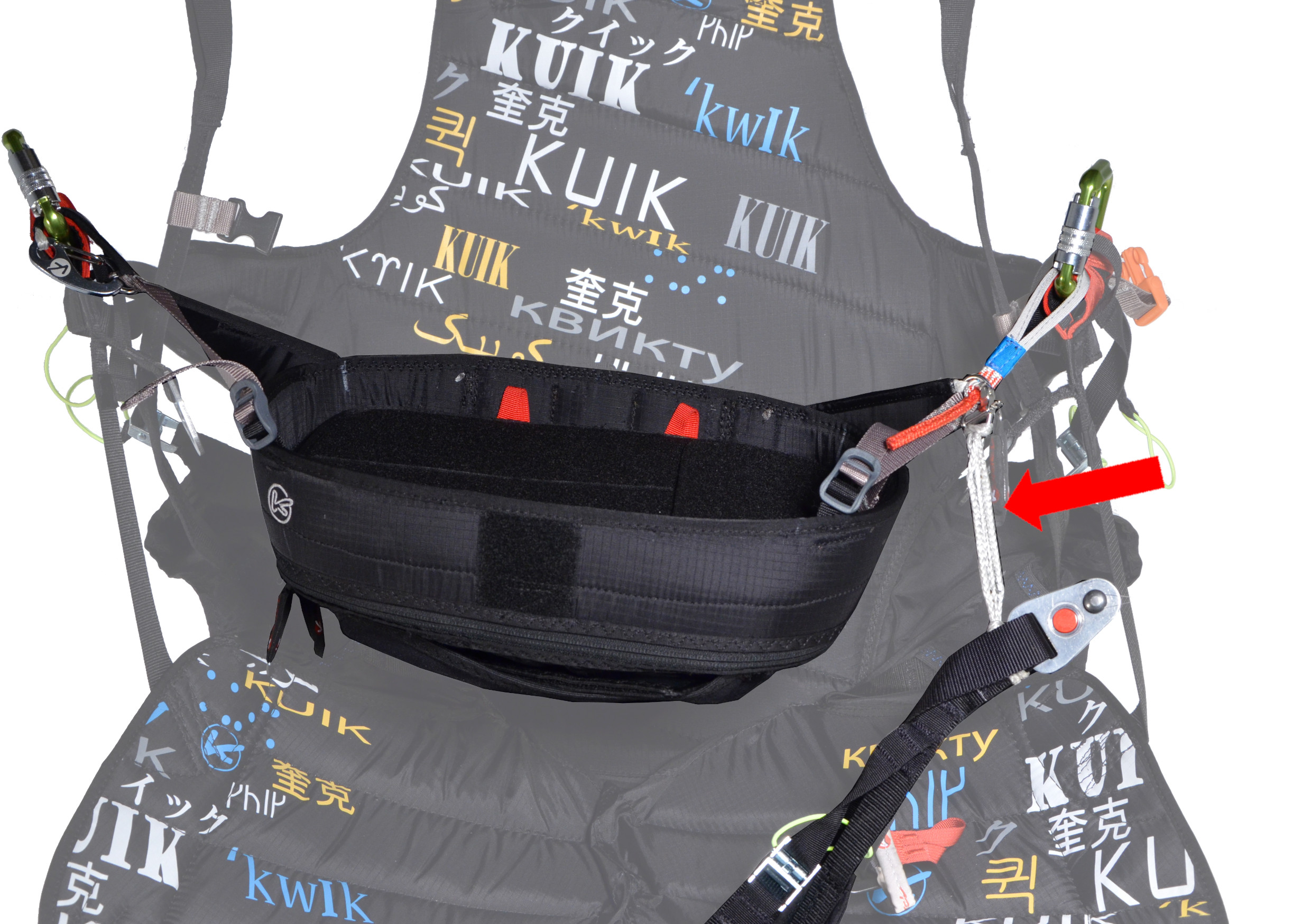
Modern harnesses with this architecture incorporate a T-bar anti-forget strap (highlighted in red) linked to one leg loop that secures the chest buckle. Even if leg buckles are left open or undone on launch, this strap restrains the harness from riding above the ribcage. The pilot can pull themselves back onto the seat and fasten buckles in flight. However, anti-forget straps must not be overly long, or the pilot may hang too low to safely reach the brakes without inducing a stall!
Harnesses with V-System / Integrated Buckling
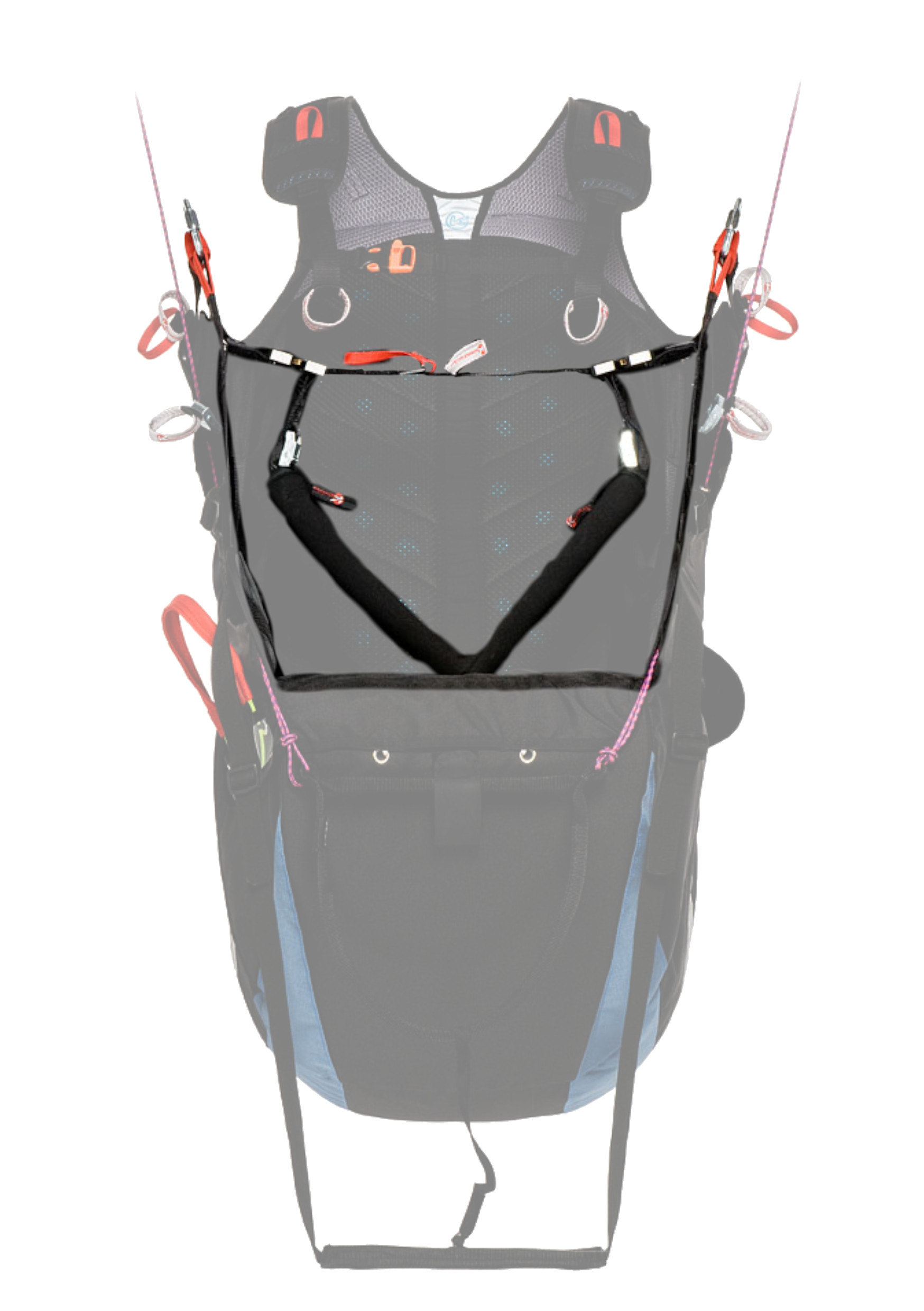
This design integrates leg loops directly with the chest buckle. As long as at least one buckle is closed, the pilot cannot fall from the harness.
The anti-forget function is permanently integrated into the structural geometry.
While flying with a single buckle fastened may feel asymmetrical and uncomfortable, it completely prevents falls.
CAUTION: Depending on the seat type, flying with only one buckle fastened creates severe roll asymmetry that can induce aggressive glider spiral turns.
Step-In Harnesses (Buckle-Free)
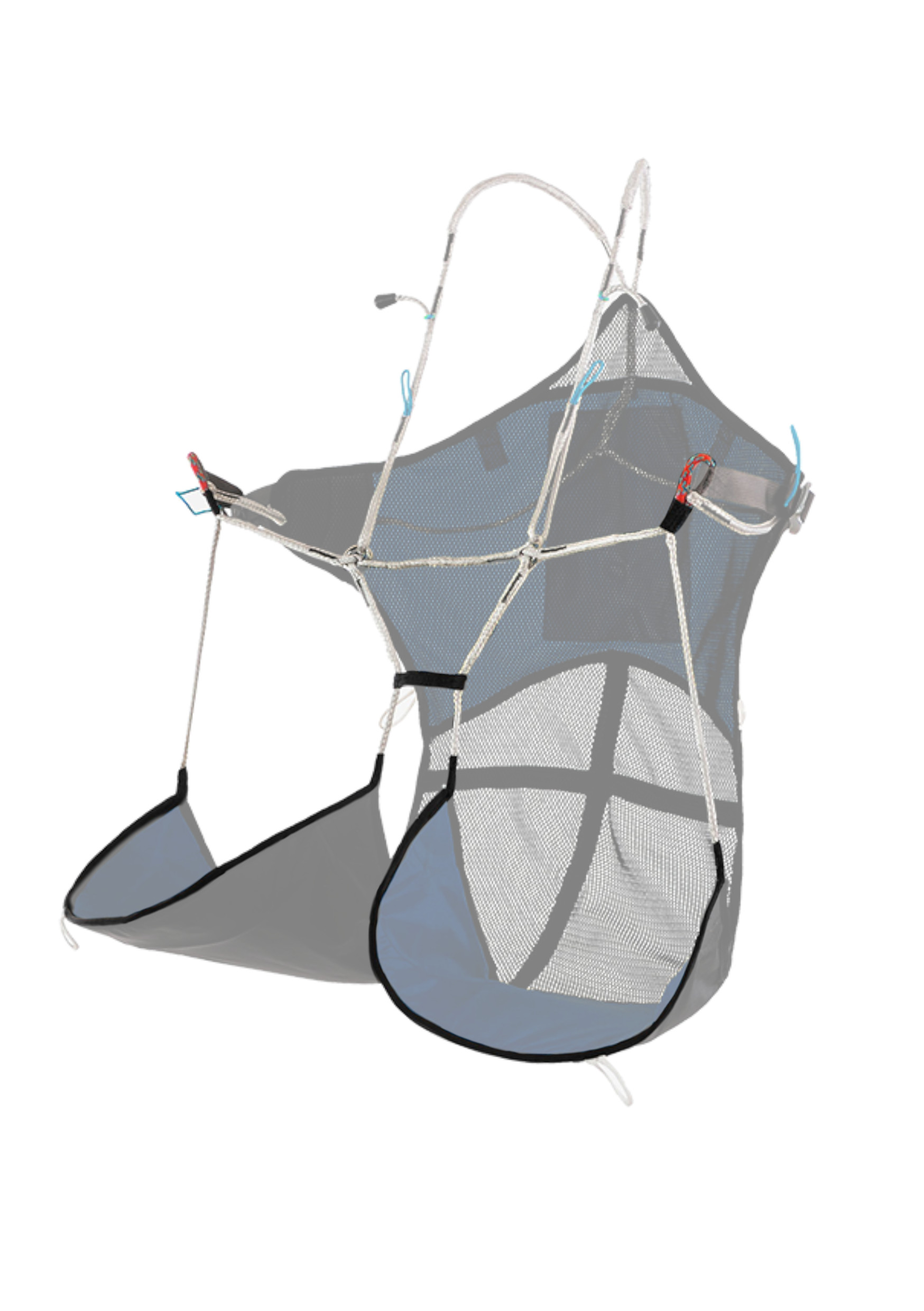
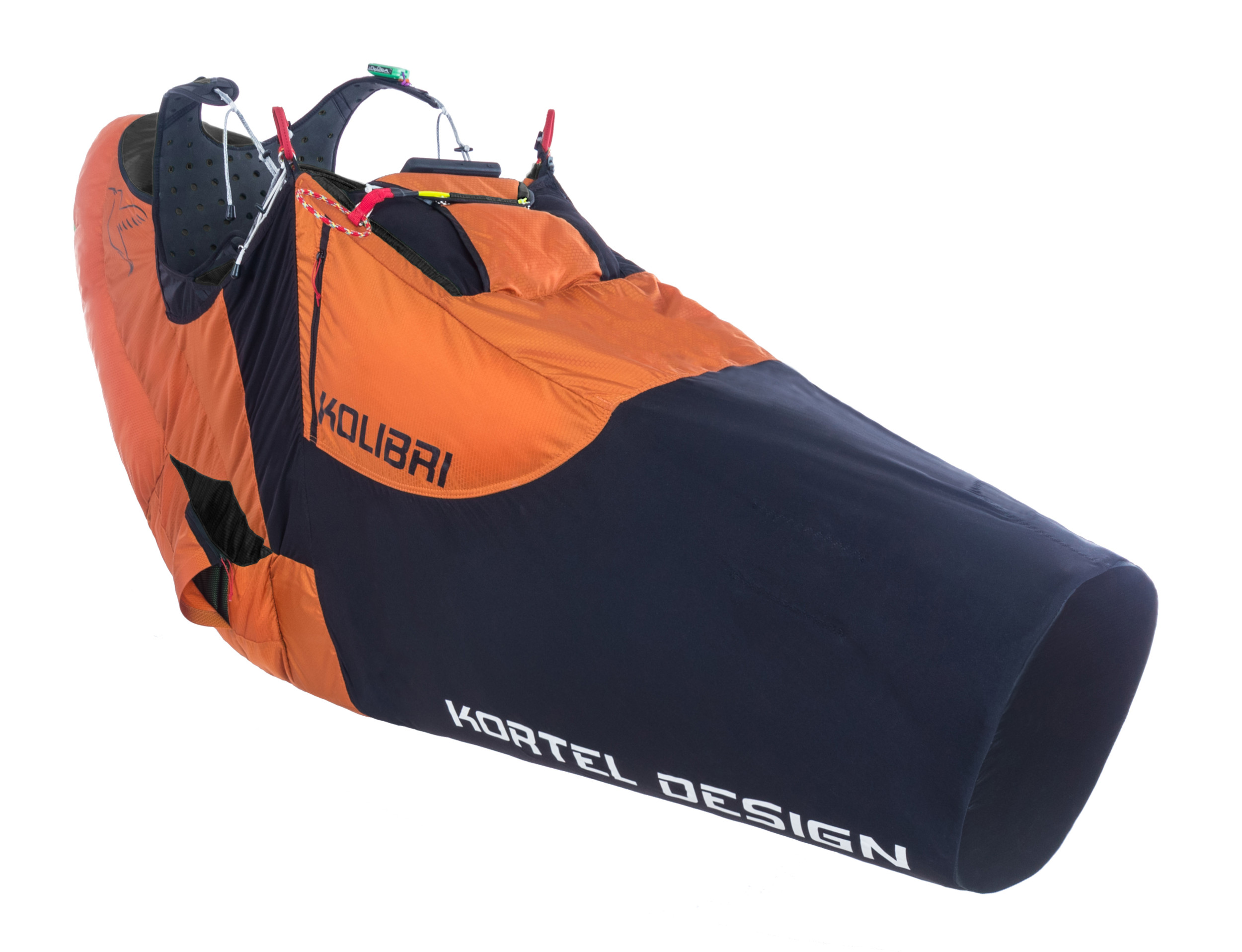
Common on hike & fly and mountaineering harnesses, mechanical buckles are eliminated altogether—not just to save weight, but for foolproof safety.
On the Kolibri, for example, the absence of buckles was a deliberate safety choice for vol-bivouac and X-Alps pilots. Extreme physical exhaustion, changing mountain conditions, and rushed launches dramatically elevate human error risks, as verified by pilots like Antoine Girard.
While stepping into a harness requires slightly more effort on launch, it provides absolute passive protection against forgetting to buckle up.
Various technical solutions exist across the market; consider these mechanisms carefully when purchasing your next harness.
ANOTHER CRITICAL FACTOR: Occlusion and Visual Blind Spots
Beyond simple distraction, visual occlusion represents a significant threat. Certain accessories installed on the harness can obstruct the pilot's visual check of their leg buckles.
Prime culprits include speed bags (pods), front-mount rescue containers, and instrument cockpits…
Here again, specialized design features help mitigate this risk.
ANTI-FORGET ACCESSORIES
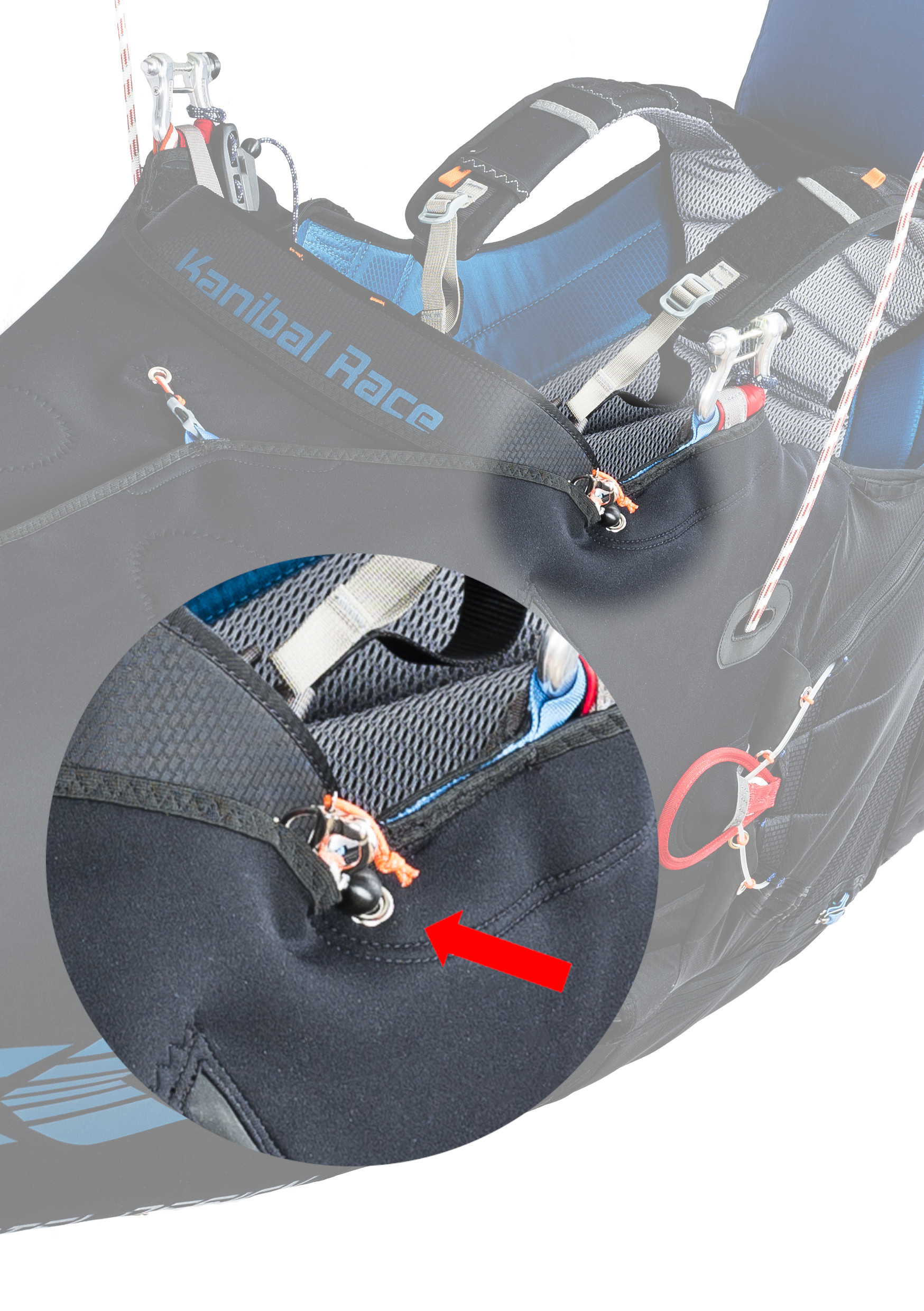
Pod Harnesses (Speedbags)
Pods are often integral to the harness structure, yet their closure routinely causes launch oversights.
Pilots take care of their gear and dislike letting the pod drag in launch dust. Consequently, the first instinct on launch is often to close the pod flap, inadvertently hiding unfastened leg straps underneath.
Engineered pods integrate an anti-forget closure link attached directly to a leg loop. Closing the pod flap automatically closes the leg loop, guaranteeing the harness cannot ride up if other buckles were missed.
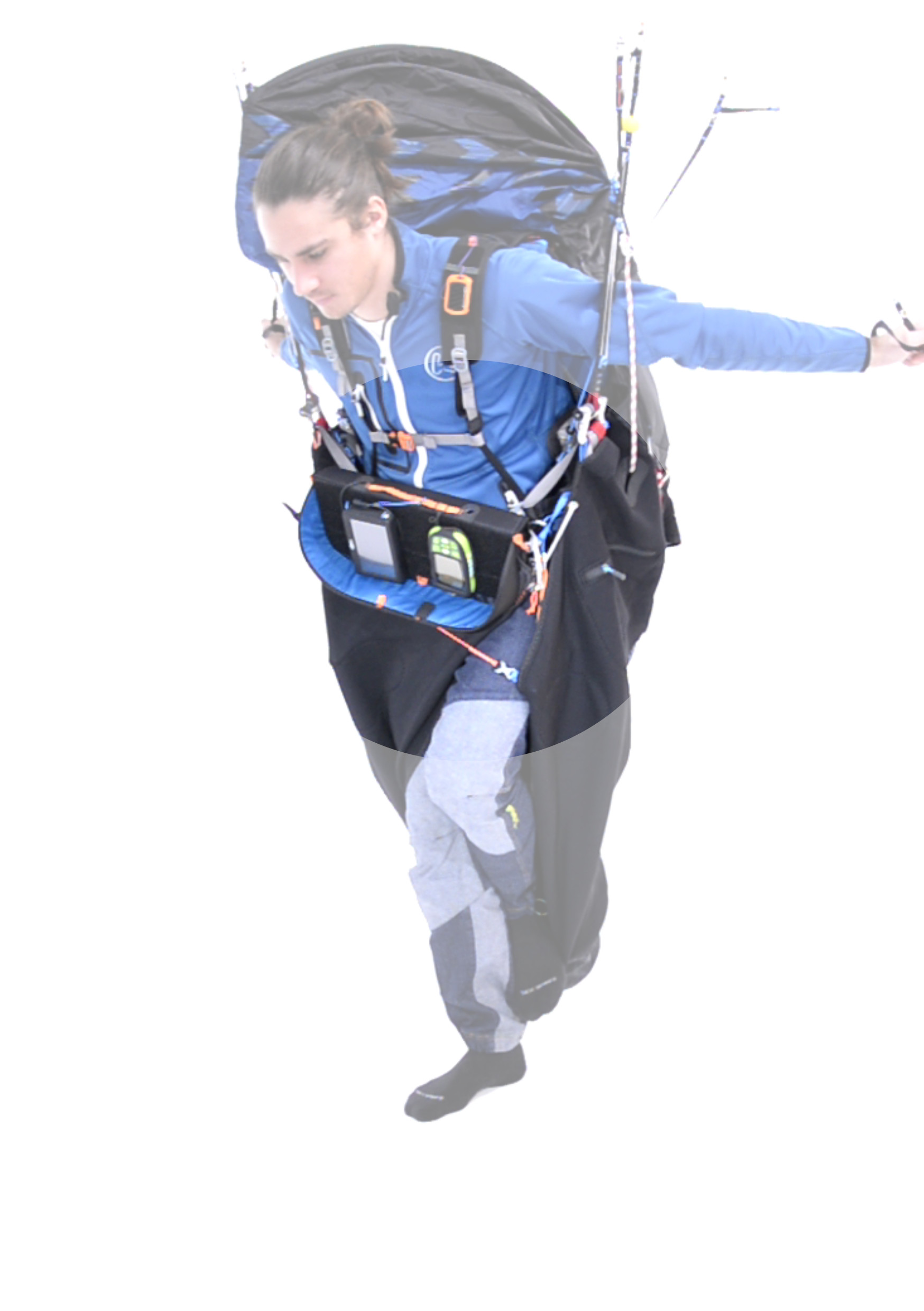
Instrument Cockpits
Similarly, flight instrument decks are quickly clipped into place on launch to protect expensive variometers and tablets, concealing the leg loops beneath.
Safety-conscious designs route cockpit attachment through a leg strap, ensuring that mounting the deck simultaneously secures the pilot's leg geometry.
DIY Anti-Forget Method
If your harness lacks an integrated system, here is a straightforward modification applicable to any harness:
Permanently secure one leg buckle in the closed position.
Use tape, an elastic band, a neoprene sleeve, or a stitch to prevent opening that buckle. Stepping through that closed leg loop when donning the harness guarantees you can never fall out, even if you overlook every other buckle.
CONCLUSION
While human error causes these incidents, thoughtful manufacturer safeguards significantly reduce risks. However, no mechanical system can substitute for disciplined pilot pre-flight routines.
Share this analysis broadly across the flying community to raise awareness and prevent avoidable tragedies.
We are privileged to enjoy one of the most magnificent free-flight sports on Earth.
Fly safe, take care of yourself, and have great flights!